How to Clean Window Frames: Aluminum, Vinyl and Wood
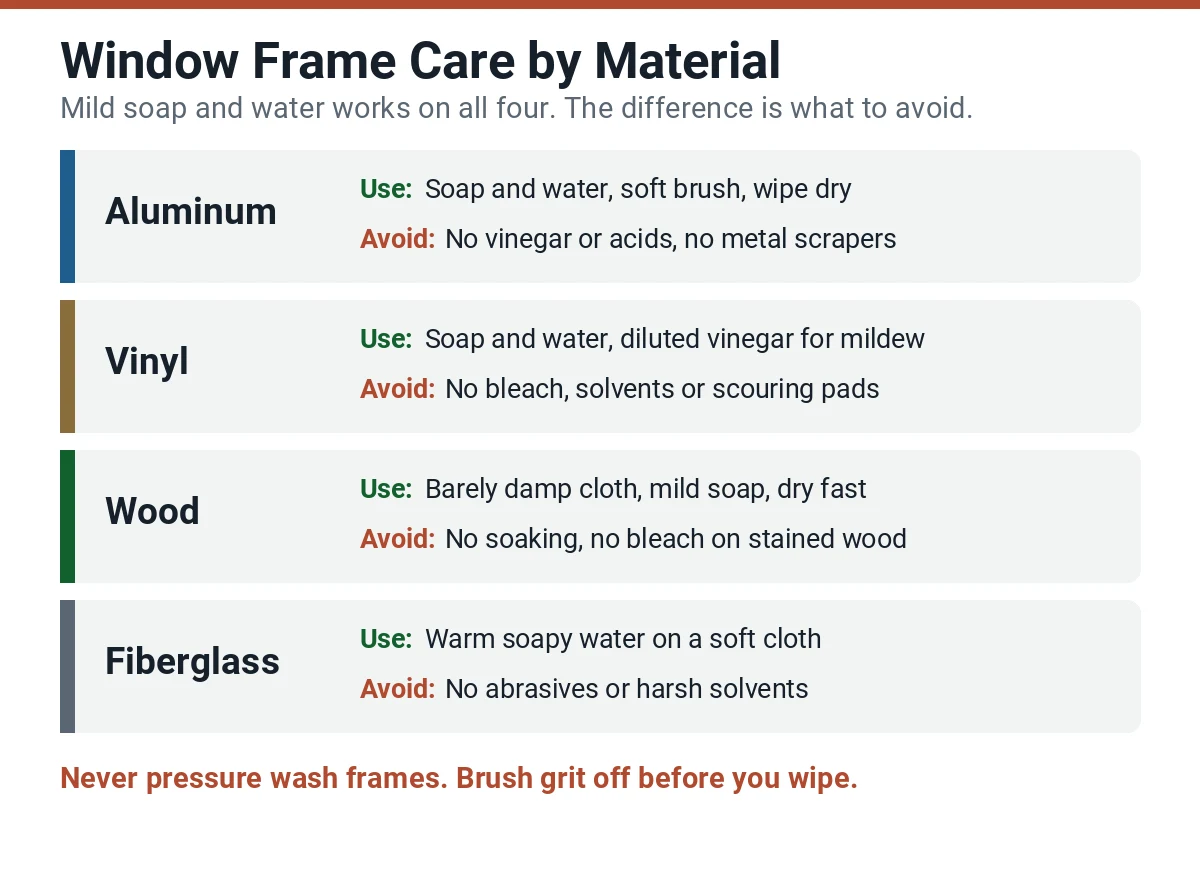
To clean window frames, brush off loose dirt and sand first, then wash them with warm water, a little mild dish soap and a soft cloth or sponge, and wipe them dry. That works on aluminum, vinyl, wood and fiberglass. What changes by material is what to avoid, and getting that wrong can damage the finish for good.
Here’s how to tell what your frames are made of, how to clean each one, and what window makers say never to use, with extra care for frames near the ocean.
First, What Are Your Frames Made Of?
| Material | How to tell |
|---|---|
| Aluminum | Thin, metal frames that feel cold, often silver, bronze or white. Common on older sliders |
| Vinyl | Thicker plastic frames, usually white or tan, with rounded edges |
| Wood | Visible grain or painted wood, often on older homes. May have metal or vinyl cladding outside |
| Fiberglass | Looks like painted wood or vinyl but feels harder and very stiff |
Not sure? Check the paperwork from your windows or a label on the frame edge, and use the gentlest method until you know.
How to Clean Aluminum Window Frames
- Brush off grit. Use a soft brush or vacuum to remove sand and dust. Rubbing grit into the finish scratches it.
- Wash. Wipe with warm water and a little mild dish soap on a soft cloth or sponge. Use a soft-bristle brush in the corners.
- Rinse the cloth and wipe again with clean water so no soap is left behind.
- Dry. Wipe dry with a soft cloth, which also stops hard water spots.
The white chalky stuff. That’s usually oxidation, a reaction between the aluminum and air, moisture and salt. Light chalkiness often improves with a gentle soap wash. Many online guides suggest vinegar for it, but window makers and the aluminum finishing industry warn against acidic or strong alkaline cleaners on finished frames, because they can damage the coating and leave the metal exposed. Stick to mild soap. If the surface is pitted or rough after cleaning, that’s damage, not dirt.
Some makers suggest a light coat of car wax on aluminum frames once a year, but only after a thorough clean. Waxing over salt seals it onto the frame.
How to Clean Vinyl Window Frames
- Wash with warm water and a little mild dish soap on a soft cloth
- For mildew spots, use a diluted white vinegar and water solution, leave it a few minutes, then wipe and rinse
- For greasy marks, a paste of baking soda and water on a soft cloth works
- Rinse well so cleaner doesn’t dry on the frame, then wipe dry
Skip bleach, which can yellow vinyl, and never use solvents like paint thinner, acetone or mineral spirits. If your vinyl frames are evenly yellow even after a good clean, that’s usually sun aging in the material itself, and cleaning won’t reverse it.
How to Clean Wood Window Frames
Wood needs the least water of any frame. Whether it’s painted or stained, clean it the same gentle way:
- Dust it first with a dry, soft cloth
- Wipe with a well-wrung cloth and a little mild soap. Barely damp, never dripping
- Dry it right away
- Test any cleaner on a hidden spot first
Don’t use bleach on natural or stained wood, which can discolor it. Mold that keeps coming back usually means moisture is getting in, often from condensation on the glass. Look for cracks, peeling paint or soft spots. Window makers recommend sealing or refinishing those right away, before water gets into the wood.
How to Clean Fiberglass Window Frames
Fiberglass is the easiest. Warm soapy water on a soft cloth handles most dirt, and a gentle glass cleaner on the cloth takes care of dark marks. Rinse and dry. Avoid abrasive pads and harsh solvents, which can dull the finish.
What never to use on window frames
- Pressure washers or high-pressure hoses, which can damage frames and seals and may void warranties
- Abrasive pads, steel wool, scouring powders or metal scrapers
- Razor blades or metal putty knives
- Acidic or strong alkaline cleaners on aluminum
- Bleach on vinyl or natural wood
- Solvents and petroleum-based products like thinner, acetone or mineral spirits
- A dry cloth on gritty frames, which grinds the dirt in
Frames Near the Ocean
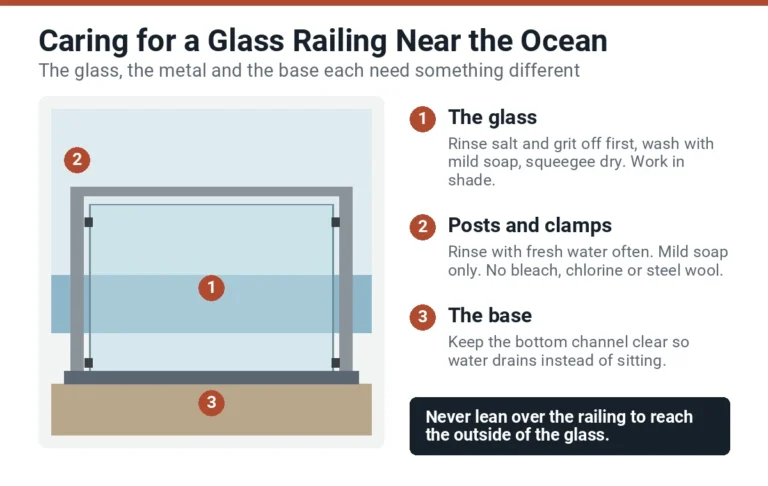
Salt is hard on frames. Near the coast, fog and sea air leave salt on frames that dries, builds up and bonds to the surface, and salt left on aluminum and hardware speeds up wear. Window makers recommend that coastal homes clean frames more often, as often as monthly, and rinse off sand and salt as soon as they see it. They also suggest lubricating locks and moving hardware twice a year in salt air.
The same salt hazes the glass. See salt film on windows. Tracks are their own job. See how to clean window tracks.
When It’s Not a Cleaning Problem
Some frame problems look like dirt but aren’t:
- Pitting or rough spots on aluminum. The finish has broken down.
- Soft, dark or crumbly wood. Likely rot from moisture.
- Peeling paint or flaking finish. Needs refinishing, not scrubbing.
- Warped or cracked vinyl. Usually means repair or replacement.
- Fog between the panes. A failed seal. See condensation between window panes.
For those, a window repair company is the right call. Screens are separate too. See window screen repair.
Window Frame Cleaning FAQs
Want the glass done while you handle the frames? Call (949) 203-0880. Tell us how many windows you have and how close you are to the ocean.