Why Do My Windows Look Dirty After Rain?
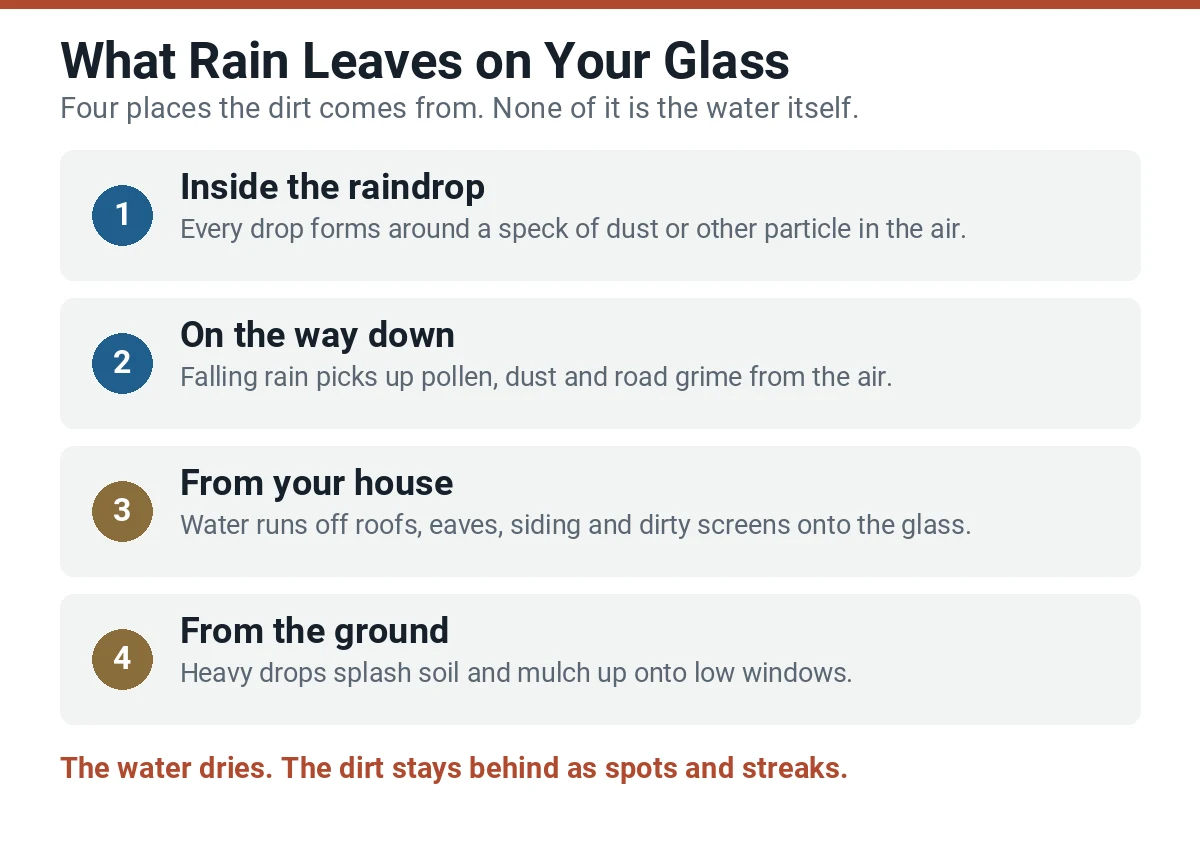
Why do your windows look dirty after rain? Because the dirt was already there. Rain wets the dust and pollen sitting on the glass, adds a little of its own, and washes down grime from your roof, eaves and screens. When the water dries, everything it carried stays behind as spots and streaks.
Here’s what’s actually in rain, why the first storms of the season are the worst, and a short checklist to get your windows ready before the winter rains arrive.
Rain Doesn’t Clean Windows
It’s a common hope: skip the cleaning and let the rain rinse the glass. It doesn’t work, for the same reason rinsing a dusty car with a hose and letting it air-dry leaves it spotty. Water moves dirt around but doesn’t carry it all away, and whatever is left in each drop dries onto the glass.
Rain doesn’t ruin clean glass, though. Clean windows shed water more evenly and have less dirt for the rain to spread, so they hold up much better through a storm.
What’s Actually in a Raindrop
Rain isn’t pure water. Each drop forms around a tiny particle in the air, often a speck of dust. On the way down it picks up more: pollen, dust, soot from traffic and other fine particles. Near the ocean, rain can also carry salt. That’s why even a light shower can leave a speckled film on glass that looked fine the day before.
What Your House Adds
Most of the dirt on your windows after a storm doesn’t fall from the sky. It comes from the house around the glass.
- Roofs and eaves. Water running off the roofline carries whatever collected up there and can streak the windows below.
- Siding and stucco. Runoff picks up dust and minerals from walls and concrete sills.
- Screens. Rain passing through a dusty screen carries its dirt straight onto the glass.
- Soil and planters. Heavy drops splash dirt and mulch up onto low windows and sliders.
Why the First Rain Is the Worst
Most of the year’s rain in coastal Southern California falls in winter. National Weather Service figures for nearby San Diego put about 85% of the rainfall between November and March. By the time the first storms arrive, months of dust have built up on roofs, screens and sills, and the Santa Ana winds often add a thick layer on top. The first rains wash a lot of it down at once.
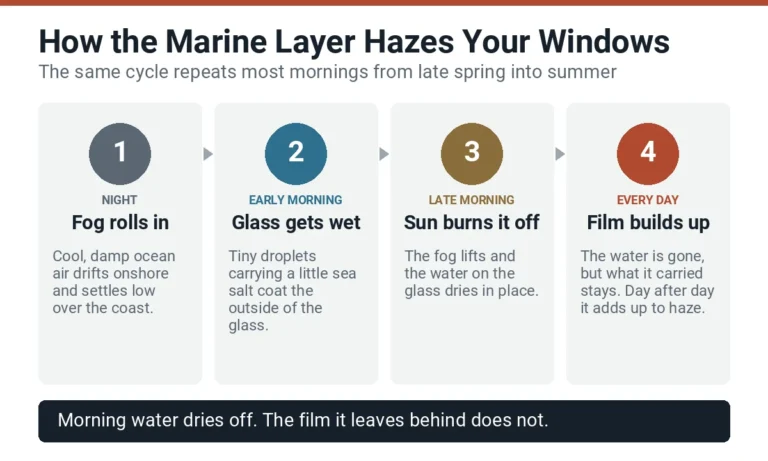
Near the beach, glass may also already carry salt film and moisture from the marine layer, which holds onto dust and makes rain spots stand out more. Inland, rain on glass already marked by sprinkler spots makes those spots easier to see.
How to Get Windows Ready for the Rainy Season
Window makers recommend checking a few things before wet weather arrives. Most of it takes an afternoon.
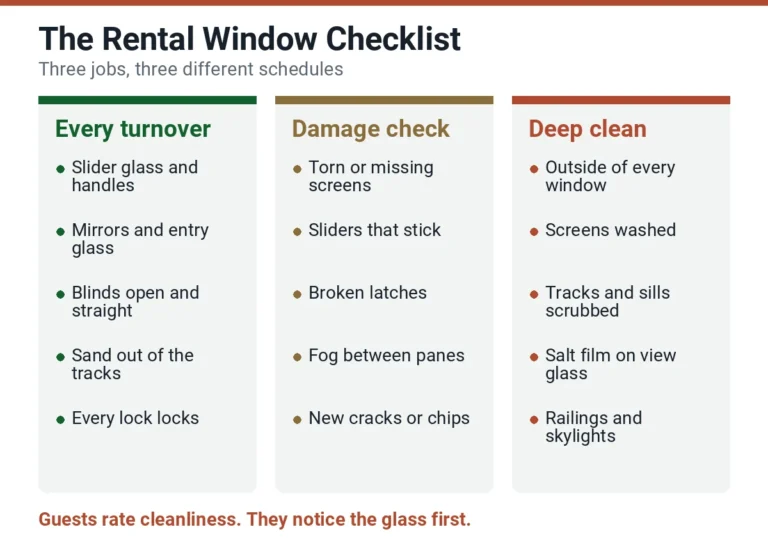
- Clear the weep holes. These small slots on the outside bottom of sliders and many windows let rainwater drain out of the track. Clear them gently with a soft brush.
- Test the drainage. Pour a cup of water into the track and make sure it drains outside.
- Clean the tracks and sills. Dirt in the track blocks drainage. See how to clean window tracks.
- Wash the screens. Clean screens mean less dirt rinsed onto the glass. See how to clean window screens.
- Check the outside caulk. Look for cracks or gaps where the frame meets the wall.
- Check the weatherstripping on sliders and doors for gaps or tears.
- Clean the glass before the storms. Clean glass sheds rain more evenly and spots less.
What not to do
- Caulk, paint or seal over weep holes. They’re meant to let water out.
- Drill extra drainage holes in the frame
- Push a wire deep into a weep hole, which can damage the glass unit
- Pressure wash around window seals and frames
- Wipe rain-spotted, sandy glass dry, which can scratch it
Why Weep Holes Matter
Every window lets a little water into its track when it rains hard. That’s normal, and weep holes are how it gets out. When they’re packed with dirt, sand or old paint, the water has nowhere to go. It can sit in the track, rot or stain the sill, or spill over the inside edge onto the floor. A five-minute check in the fall can prevent a leak in January.
When to Get Help
If your tracks are packed with grime or you’d rather not clean every screen yourself, see screen and track cleaning. For keeping the glass itself clear through the wet months, see recurring window cleaning in San Clemente. And if a window leaks even with clear weep holes and solid caulk, it may need a window repair company rather than a cleaner.
Rain and Window FAQs
Want your windows clear before the rains? Call (949) 203-0880. Tell us how many windows and screens you have.