How to Clean a Mirror Without Streaks (or Black Edges)
To clean a mirror without streaks, dust it with a dry microfiber cloth, then wipe it top to bottom with a second cloth lightly dampened in warm water or an ammonia-free cleaner, sprayed onto the cloth, not the mirror. Buff it dry right away with a clean, dry cloth, and finish by drying the edges.
That last step matters more than most guides admit. Here’s why mirror makers say to skip the popular vinegar trick, how to get hairspray and toothpaste spots off, and how to keep a bathroom mirror from going black at the edges.

Why Mirrors Streak More Than Windows
A window lets light through. A mirror bounces it straight back at you, so any film, lint or leftover cleaner shows up clearly, especially under bright bathroom lights. And bathroom mirrors aren’t just dusty. Hairspray, soap mist and steam leave a sticky film that a dry wipe just spreads into a wider, duller haze.
What Mirror Makers Actually Recommend
A mirror is a sheet of glass with a thin metal reflective layer on the back, covered by protective paint. The glass is tough. The backing, especially at the edges, is not. That’s why the glass industry’s mirror-cleaning guidance is so simple:
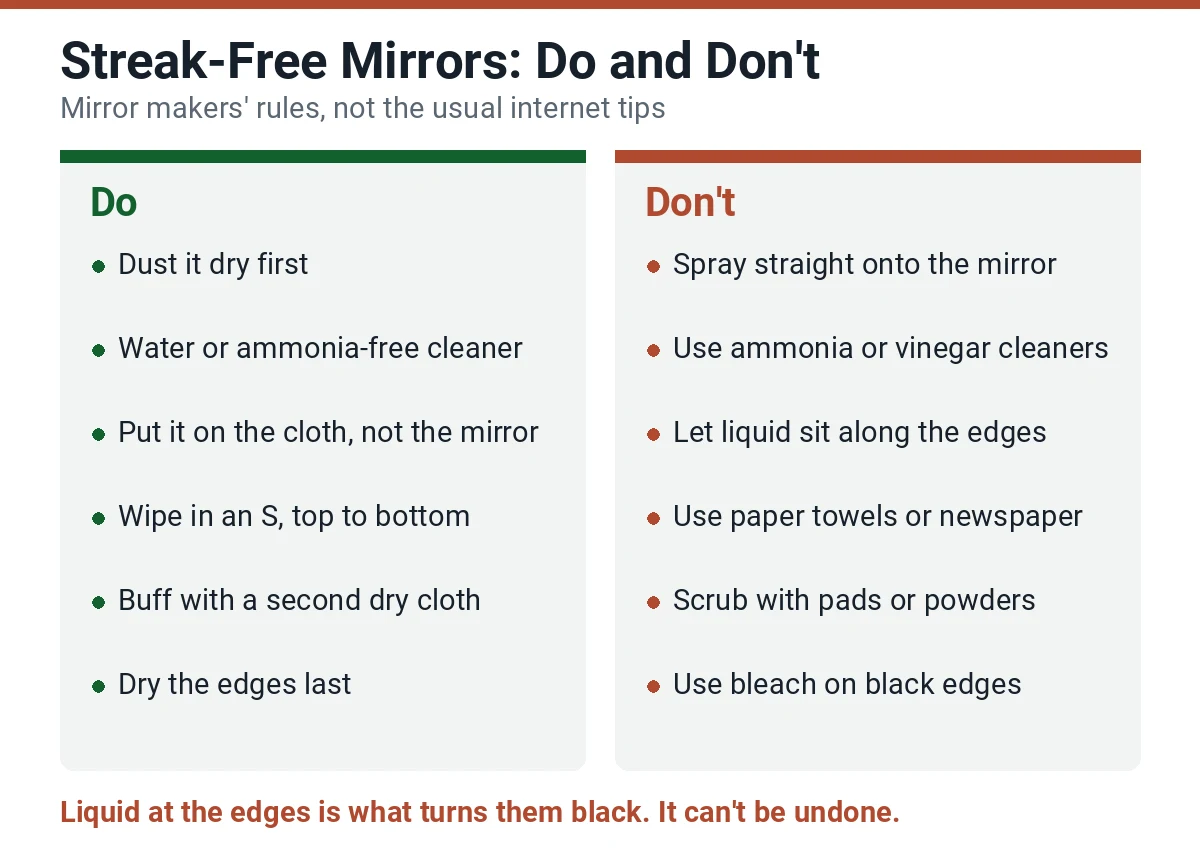
- Warm water and a soft, lint-free cloth is the safest cleaner
- If you use a cleaner, choose one with no ammonia and no vinegar
- Never spray cleaner directly onto the mirror. Put it on the cloth
- Never use acid, alkali or abrasive cleaners
- Dry all edges and joints when you’re done
Many popular cleaning guides recommend a vinegar-and-water spray for mirrors. Mirror makers advise against it, because acids and harsh cleaners that reach the edges can damage the backing. Warm water does the job on most mirrors anyway.
The Two-Cloth Method, Step by Step
- Dust first. Wipe the dry mirror with a clean microfiber cloth. Wetting a dusty mirror turns dust into streaks.
- Spot-treat. Loosen toothpaste, hairspray and makeup spots first (see below).
- Dampen the cloth, not the mirror. Use warm water or an ammonia-free cleaner, and wring the cloth so it’s barely damp.
- Wipe top to bottom in an S. Overlapping side-to-side passes leave fewer marks than circles.
- Buff dry right away with a second clean, dry microfiber cloth.
- Dry the edges last. Run a dry cloth or cotton swab along every edge, especially the bottom.
If your tap water is hard, it can leave faint spots when it dries. San Clemente’s latest water quality report puts its supplies at about 14 to 17 grains of hardness per gallon, so buff the mirror dry instead of letting it air-dry, or use distilled water in your spray bottle.
Hairspray, Toothpaste and Makeup Spots
- Toothpaste and water spots. Hold a warm, damp cloth on them for a few seconds, then wipe. They usually lift easily.
- Hairspray film. It’s sticky, so warm water and a little patience help. For stubborn spots, many people use a small amount of rubbing alcohol on a cotton pad, pressed on the spot briefly. Keep it off the edges and the frame, and open a window.
- Makeup. Wipe with a damp cloth first. A drop of mild dish soap in warm water helps with oily makeup. Rinse the cloth and wipe again so no soap film is left.
What not to use on a mirror
- Cleaners with ammonia or vinegar
- Paper towels or newspaper, which leave lint and can leave fine marks
- Scouring pads, powders or whitening toothpaste
- Bleach on black edges. It won’t fix them and can make them worse
- Lots of liquid near the edges or frame
Black Edges: How to Stop Them Spreading
Dark marks creeping in from the edge of a bathroom mirror are the reflective layer breaking down after moisture got past the backing. They usually start at the bottom, where water and cleaner run down and collect. Once they’re there, they can’t be cleaned off. But you can slow them down:
- Spray the cloth, never the mirror
- Dry the bottom edge after every clean
- Run the bathroom fan during and after showers
- Wipe splashes along the edges instead of leaving them to dry
- Avoid ammonia and vinegar cleaners near the edges
If the black edges are already spreading, the mirror itself is damaged. Cleaning can keep it from getting worse, but it won’t bring the reflection back. For how this fits with the rest of your inside glass, see mirror and interior glass cleaning.
Mirrored Closet Doors
Large mirrored doors follow the same rules, just in sections. Dust each panel, then use the two-cloth method from top to bottom. Hand marks gather at the height people push the doors, so finish there. Dry the bottom edges well, and vacuum the track so grit doesn’t drag the doors or scratch the frames.
When to Get Help
If you’d rather have mirrors, shower doors and inside glass done along with your windows, see shower glass, mirror and interior glass cleaning in San Clemente. Streaks on your windows have different causes. See why windows streak after cleaning.
Mirror Cleaning FAQs
Mirrors, shower doors and windows all need it? Call (949) 203-0880. Tell us what you’d like cleaned inside and out.