How to Clean Textured and Frosted Glass
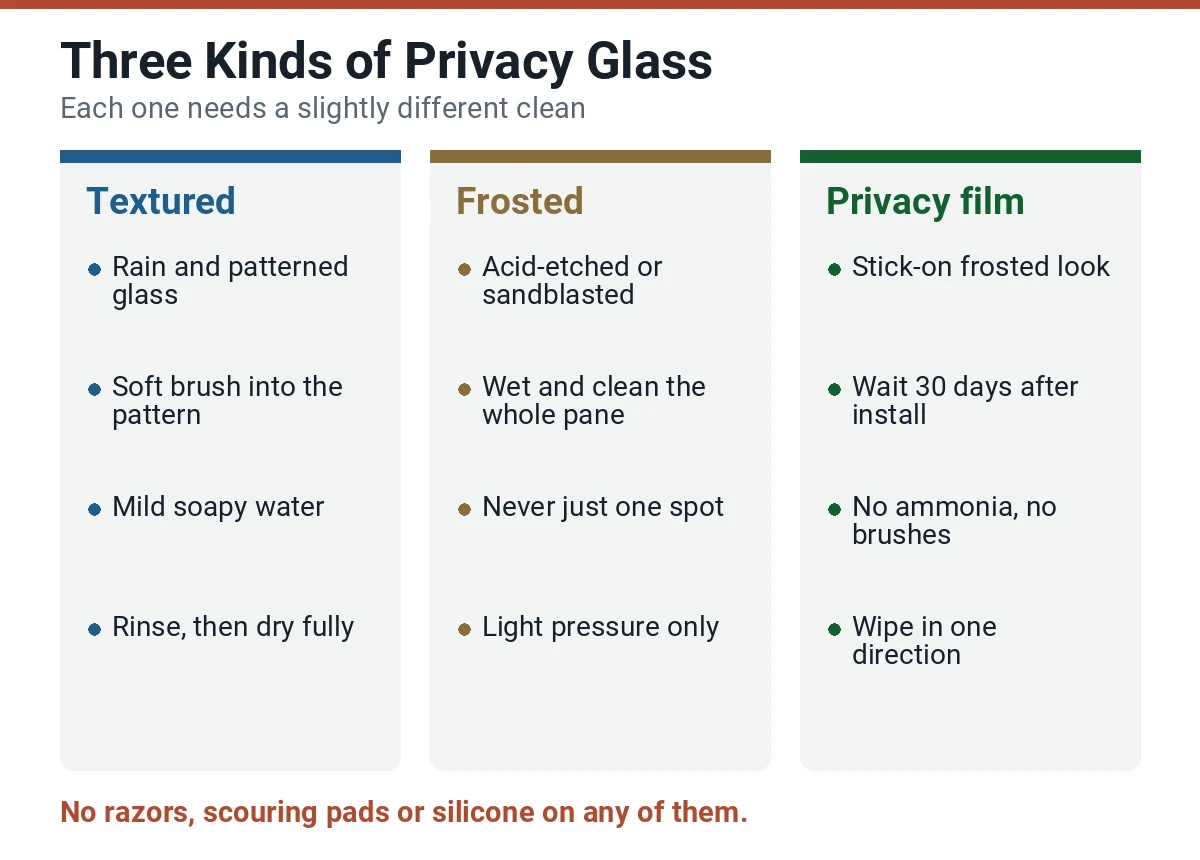
To clean textured glass, brush the dirt out of the pattern with a soft brush, wash it with warm water and a little mild dish soap, rinse and dry it well with a microfiber cloth. Frosted glass and privacy film need a gentler touch: plenty of water, light pressure, and no razors, scouring pads or ammonia sprays on film.
Here’s how to tell which kind of privacy glass you have, how to clean each one, and why fingerprints and hard water spots are so hard to get out of textured surfaces.
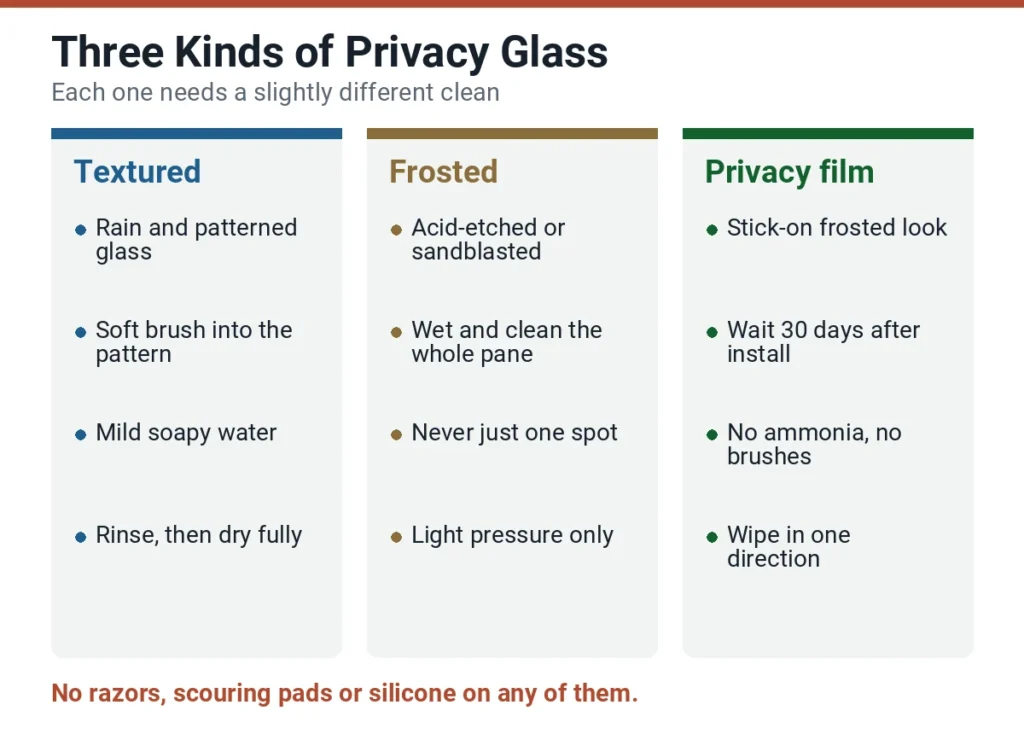
Know Your Glass First
| Type | What it looks like | Where you see it |
|---|---|---|
| Textured or patterned | A raised pattern you can feel, like rain, ripples or reeds | Bathroom windows, entry doors, sidelights, shower doors |
| Frosted (acid-etched or sandblasted) | Smooth, even, milky surface that feels slightly rough on one side | Bathroom windows, doors, cabinets, shower enclosures |
| Privacy film | A frosted or patterned plastic layer stuck on clear glass | Added later to windows and sliding doors |
One note on words: on this site, “etched” glass usually means clear glass damaged by hard water. Frosted glass made by acid-etching at the factory is something else entirely, and it’s meant to look that way.
Why Dirt Hides in the Texture
Every bump and groove in textured glass is a place for dust, soap and minerals to settle. A cloth glides over the top and leaves the grooves dirty, and anything left in the cleaner itself can dry into the pattern and be very hard to get out. Glass makers recommend a clear, non-abrasive cleaner and a brush to reach into the recesses.
Which Side Is Textured?
Most textured and frosted glass has one textured side and one smooth side. Run your fingers over both. On many shower doors the smooth side faces the water, so it can be squeegeed, and the textured side faces the room, but check your own door. Clean the smooth side like normal glass, and the textured side with the brush method below.
How to Clean Textured and Patterned Glass
- Dust first. Run a soft, dry brush over the pattern to loosen dust and grit.
- Wash. Dip a soft brush or sponge in warm water with a little mild dish soap and work it into the pattern, following the direction of the texture.
- Rinse. Wipe with clean water so no soap is left in the grooves.
- Dry fully. Pat and wipe with a microfiber cloth, pressing into the texture. Water left in the grooves dries into spots.
How to Clean Frosted Glass
Glass makers are strict about frosted, acid-etched glass, and the most important rule surprises people: never clean just one spot.
- Wet the whole pane. Use plenty of clean water and a soft sponge. A little standard glass cleaner can be added.
- Clean the full surface, even if only one area is dirty. Spot cleaning can leave a halo that shows from across the room.
- Use light pressure. Pressing hard can polish the frosted surface smoother in that spot.
- Rinse and wipe dry all over with a soft, lint-free cloth.
For fingerprints, the skin oil sits in the fine texture and looks darker than the glass around it. Wash the whole pane with a little dish soap in warm water. For stubborn oily marks, a standard glass cleaner that contains alcohol helps, again over the full pane, not just the mark.
How to Clean Privacy Film
Privacy film is plastic, so it scratches much more easily than glass. Film makers’ rules:
- Don’t clean new film for at least 30 days after it’s installed
- Use a soft, damp cloth, or mild soapy water for heavier dirt
- Wipe gently in one direction, not back and forth
- No ammonia or chlorine cleaners, and no brushes, sponges or scrubbers
- Keep the edges dry so water doesn’t get underneath
For tinted film and lettering on storefronts, see how to clean storefront glass doors.
Hard Water in the Texture
In bathrooms, textured and frosted shower glass catch mineral spots in every groove, and once they dry there, they’re hard to see and harder to remove. San Clemente’s latest water quality report puts its supplies at about 14 to 17 grains of hardness per gallon, which is hard water. The best defense is drying the glass after each shower: squeegee the smooth side and wipe the textured side with a microfiber cloth. For removing buildup that’s already there, see how to remove hard water stains from shower glass.
When to Get Help
If your textured or frosted glass is part of a shower enclosure, a large entry door or windows you can’t safely reach, see shower glass and interior glass cleaning in San Clemente. If streaks are your problem on clear windows, see why windows streak after cleaning.
Textured and Frosted Glass FAQs
Shower doors, frosted windows and clear glass all need it? Call (949) 203-0880. Tell us which glass you’d like cleaned.