How to Clean Low-E Glass Without Damaging the Coating
To clean Low-E glass safely, wash it with mild dish soap and water or a weak vinegar mix, use a soft microfiber cloth, rinse, and dry it out of direct sun. Skip razor blades, scrapers and abrasive cleaners. The good news: in most double-pane windows the Low-E coating is sealed between the panes, so normal gentle cleaning can’t reach it.
Most newer and replacement windows in California have Low-E glass, so if your home has been built or updated in recent years, you probably have it. Here’s what the coating is, how to tell whether yours can be touched, and what window makers say to avoid.
What Low-E Coating Is
Low-E stands for low emissivity. It’s a microscopically thin metallic layer on the glass that lets daylight through but reflects heat. In summer it helps keep heat out, and in winter it helps keep warmth in. You usually can’t see it, apart from a very slight tint.
Where the Coating Sits: Sealed Inside or Exposed
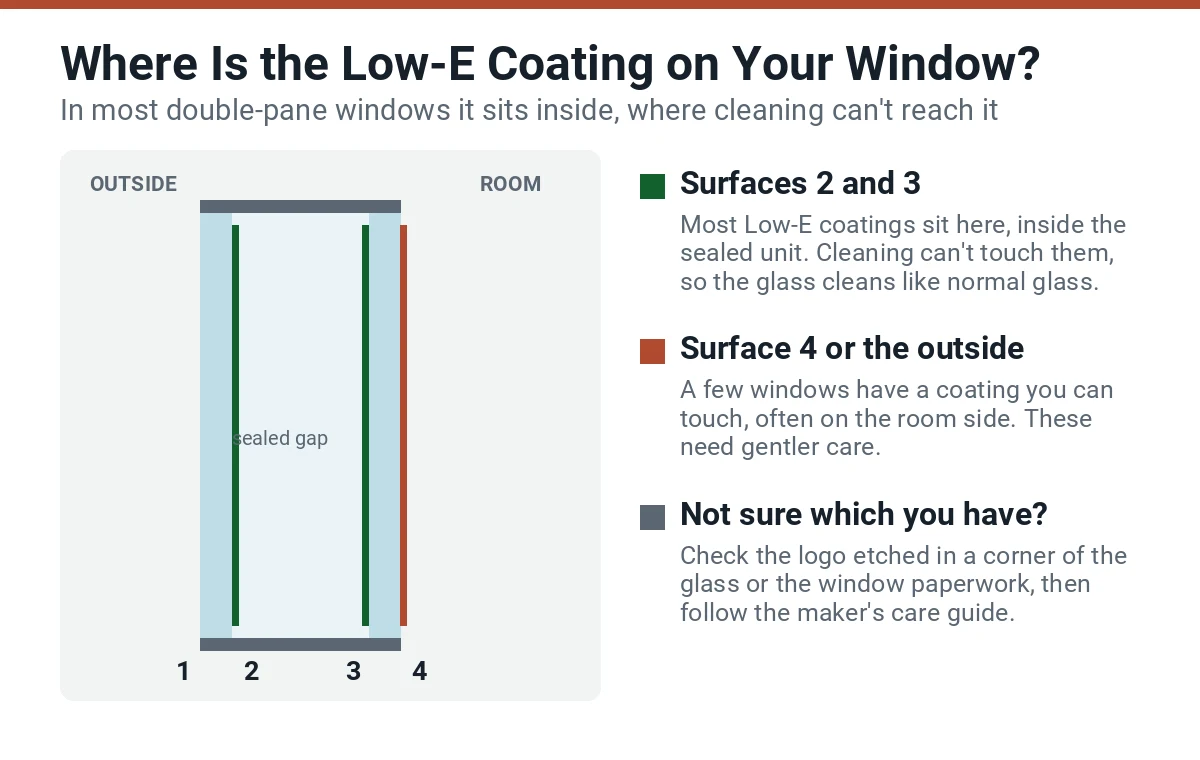
This is the part that decides everything. Glass makers number the surfaces of a double-pane window from outside to inside: 1 is the outside face, 2 and 3 face the sealed gap between the panes, and 4 faces your room.
- Most windows: the Low-E coating is on surface 2 or 3, inside the sealed unit. It’s protected, and you clean both faces of the glass like normal glass.
- Some windows: have a coating on surface 4, the room side, or a special coating on the outside. These are the ones that need gentler care.
How to find out what you have
- Look for the small logo or code etched in a corner of the glass
- Check your window paperwork or the original order
- Look up the care guide from your window’s maker
- If you can’t tell, treat the glass as if the coating is exposed
What Damages Low-E Glass
Window and glass makers agree on most of the list. Their care guides tell homeowners to avoid:
- Razor blades and metal scrapers. On an exposed coating, metal leaves marks that look like scratches in sunlight. Some makers say not to use any scraper at all on a coated surface.
- Abrasive cleaners and pads. Scouring powders, steel wool and gritty creams scratch both the glass and the coating.
- Harsh chemicals. Strong acids, petroleum-based cleaners and caustic products. Some makers also advise against ammonia or alcohol cleaners on exposed coatings.
- Pressure washers. They can push water past the seals.
- Sealants and silicone touching the glass during repairs or painting.
- Dry-wiping gritty glass, which drags sand and dust across the surface.
New windows are most at risk right after they go in, when stickers, paint and stucco tempt people to grab a blade. See how to remove stickers from new windows before you scrape anything.
How to Clean Low-E Glass, Step by Step
- Work in the shade, or on a gray day. Cleaner drying on sunny glass leaves streaks.
- Get the grit off first. Rinse outside glass with water, or dust inside glass gently, before you wipe.
- Wash generously. Mild dish soap in warm water, or a weak mix of white vinegar and water. Wet the glass well and wipe with a soft microfiber cloth.
- Rinse with clean water. If your tap water is hard, use distilled water for the last rinse.
- Dry gently with a clean, lint-free cloth. On an exposed coating, skip the squeegee and stop wiping while a very thin film of moisture is left. It dries without streaks.
Trying a new product? Test it on a small corner first and look at it in daylight before doing the whole window. For more on streaks, see why windows are streaky after cleaning.
Dirt, Hard Water, Scratches or Coating Damage?
| What you see | What it usually is | What to do |
|---|---|---|
| Haze that changes when wet and wipes off | Dirt or leftover cleaner | Rinse and clean again |
| White rings or spots that stay after washing | Hard water spots | See hard water stain removal |
| Fine lines that catch a fingernail | Scratches | Permanent. Stop scrubbing |
| Patchy haze, swirls or discoloration that never changes | Damage to an exposed coating | Usually permanent. Ask the window maker |
| Fog between the panes | A failed seal | See condensation between panes |
Low-E Glass in San Clemente
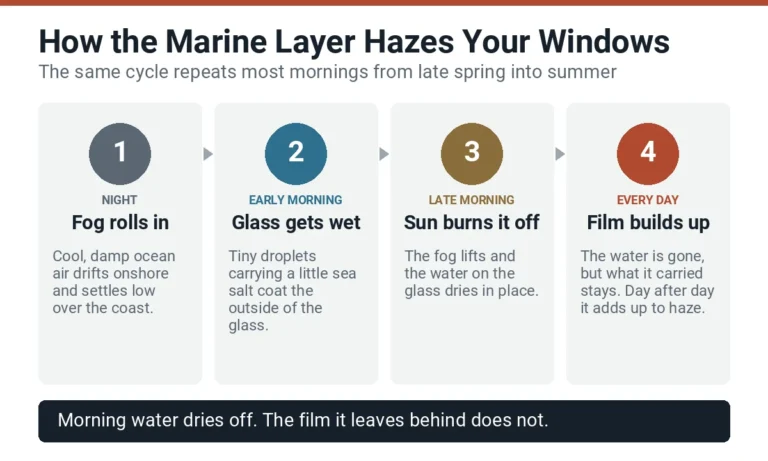
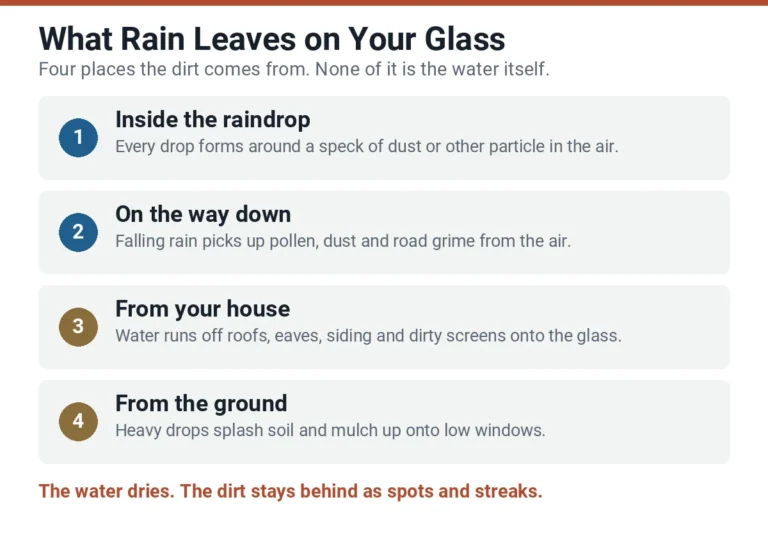
Strong coastal sun makes cleaning in the shade more important, and salt film on ocean-facing glass needs a gentle rinse before any wiping. Inland, hard tap water and sprinklers leave spots that people are tempted to scrape off. On Low-E glass, that’s exactly the wrong move. Rinse, wash gently, and get help with spots that won’t budge.
When to Call a Pro
Call for help with new windows covered in construction mess, spots that won’t come off with soap or vinegar, or high glass you can’t reach safely. See post-construction window cleaning and interior glass cleaning, or call (949) 203-0880 for a free quote.
Low-E Glass FAQs
Not sure your windows can take it? Call (949) 203-0880. Mention the window brand if you know it.