How to Clean Bird Poop Off Windows Without Scratching
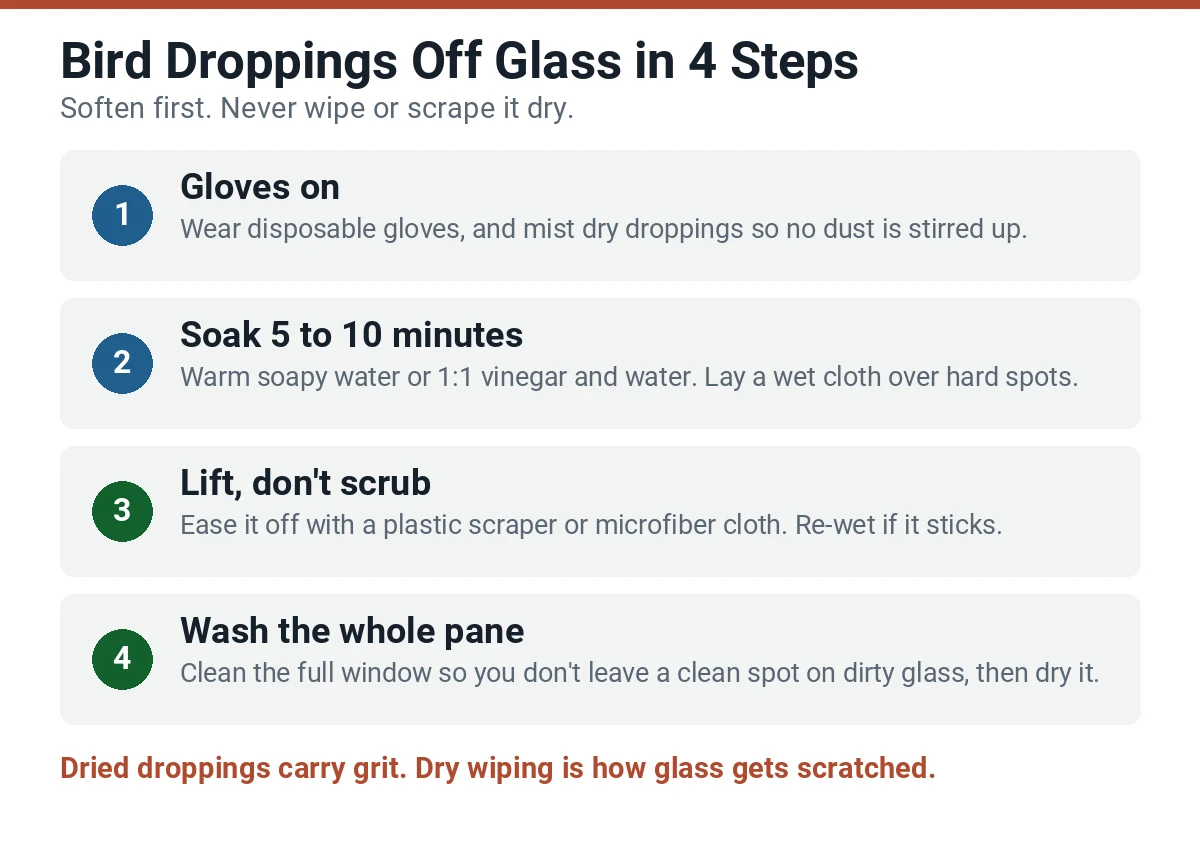
To clean bird poop off windows, put on gloves, soak the droppings with warm soapy water or a 1:1 mix of vinegar and water for 5 to 10 minutes, then lift them off with a plastic scraper or microfiber cloth. Wash the whole pane and dry it. The one rule that matters most: never wipe or scrape bird droppings off dry glass.
Near the coast, gulls and pigeons make this a regular chore. Here’s how to remove bird droppings without scratching the glass, what’s actually in them, and how to keep birds off your window ledges.
What’s in Bird Droppings
The white part is uric acid, the way birds get rid of waste. It’s acidic and bakes hard in the sun. Mixed in are undigested seeds, grit and tiny bits of sand, plus bacteria and fungi. That grit is the real problem for glass. When a dried dropping is wiped off dry, the grit gets dragged across the surface.
Can Bird Poop Damage Glass?
Glass is much harder than car paint, so the damage people worry about from car windshields is far less common on house windows. Some sources report light etching or a frosted mark where droppings sat on glass in hot sun for a long time. That kind of damage isn’t well studied on window glass.
What is well known is scratching. Most marks people find after removing bird droppings come from rubbing them off dry. Either way, the advice is the same: remove droppings soon, and always soften them first.
How to Clean Bird Poop Off Windows, Step by Step
- Put on gloves. Disposable gloves are fine for a few spots.
- Wet it first. Mist dried droppings with water before you touch them, so no dust gets stirred up.
- Soak it. Spray warm soapy water or 1:1 white vinegar and water, and leave it 5 to 10 minutes. For hard spots, press a soaked cloth or paper towel over the dropping.
- Lift it off. Use a plastic scraper held at a low angle, or a damp microfiber cloth. If it doesn’t come off easily, soak it again instead of pressing harder.
- Wash the whole pane. Otherwise you’ll have a clean spot on dirty glass.
- Rinse and dry with a squeegee or a clean microfiber cloth.
- Wash your hands when you’re done.
Throw away the paper towels and wash the cloths separately from kitchen towels. If you’re seeing streaks afterward, see why windows streak after cleaning.
What not to do
- Wipe or scrape droppings off dry glass
- Use a metal blade, scouring pad or stiff brush
- Pressure wash, which spreads dust and forces water past window seals
- Use a razor or ammonia cleaner on tinted film or coated glass
- Leave it for weeks, especially on sunny windows
Health Precautions
A few droppings on a window are an everyday cleanup, not a hazard, as long as you wear gloves, keep them wet and wash your hands. The bigger concern is heavy, dry buildup, such as under a roost or a ledge where birds gather. Health officials warn that dry droppings can carry fungal spores, including the ones that cause histoplasmosis, which can be breathed in when the dust is disturbed.
- Mist droppings with water first, using a gentle spray, not a hard stream
- Never dry-sweep, brush or blow piles of droppings
- Wear an N95 mask if you’re cleaning a large amount
- Have a professional handle heavy buildup
Coated and Tinted Glass
Many newer windows have Low-E coatings, and some have tint film. Skip the blade entirely on both, and use only mild soap, water or an ammonia-free cleaner on film. See how to clean Low-E glass if you’re not sure what you have.
Keeping Birds Off Window Ledges
The best way to deal with droppings is to give birds nowhere comfortable to sit. These options don’t harm birds:
- Bird spikes. Blunt-tipped strips that make a ledge hard to land on.
- Wires or fishing line. A few thin lines strung above a ledge keep larger birds like gulls from settling.
- Sloped ledge covers. A slanted cover removes the flat surface birds rest on.
- Netting. Works for bigger areas like balconies or eaves, but needs careful installation.
Fake owls, spinning toys and reflective tape tend to stop working once birds get used to them.
Gulls, Pigeons and the Law in California
Gulls are protected under the federal Migratory Bird Treaty Act, and California protects migratory birds too. That means you can keep them off your house, but you can’t harm them or disturb their active nests. Feral pigeons are not covered by the federal law. For nests or permits, check with the California Department of Fish and Wildlife. Swallows have their own rules and nesting season. See swallow nests on your house.
Ocean-View Windows Get It Twice
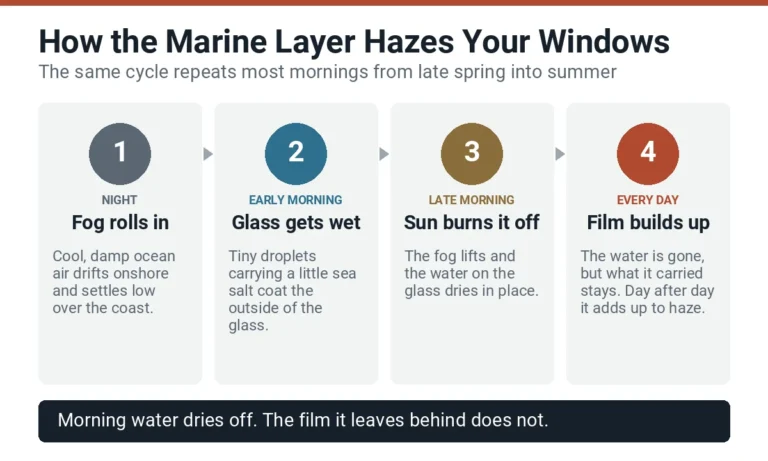
On San Clemente’s ocean-facing homes, droppings often land on glass that already carries salt film. Wiping both off dry is twice the scratch risk, so rinse well with plenty of water first. Balconies and upper windows where gulls perch tend to be the worst spots.
When to Get Help
If droppings are on second-story glass, balcony panels you can’t safely reach, or ocean-view windows that also need salt film removed, see ocean-view window cleaning in San Clemente.
Bird Droppings on Windows: FAQs
Gulls hitting your view glass? Call (949) 203-0880. Tell us which windows and how high they are.