How to Clean Skylight Shades, Blinds and Screens
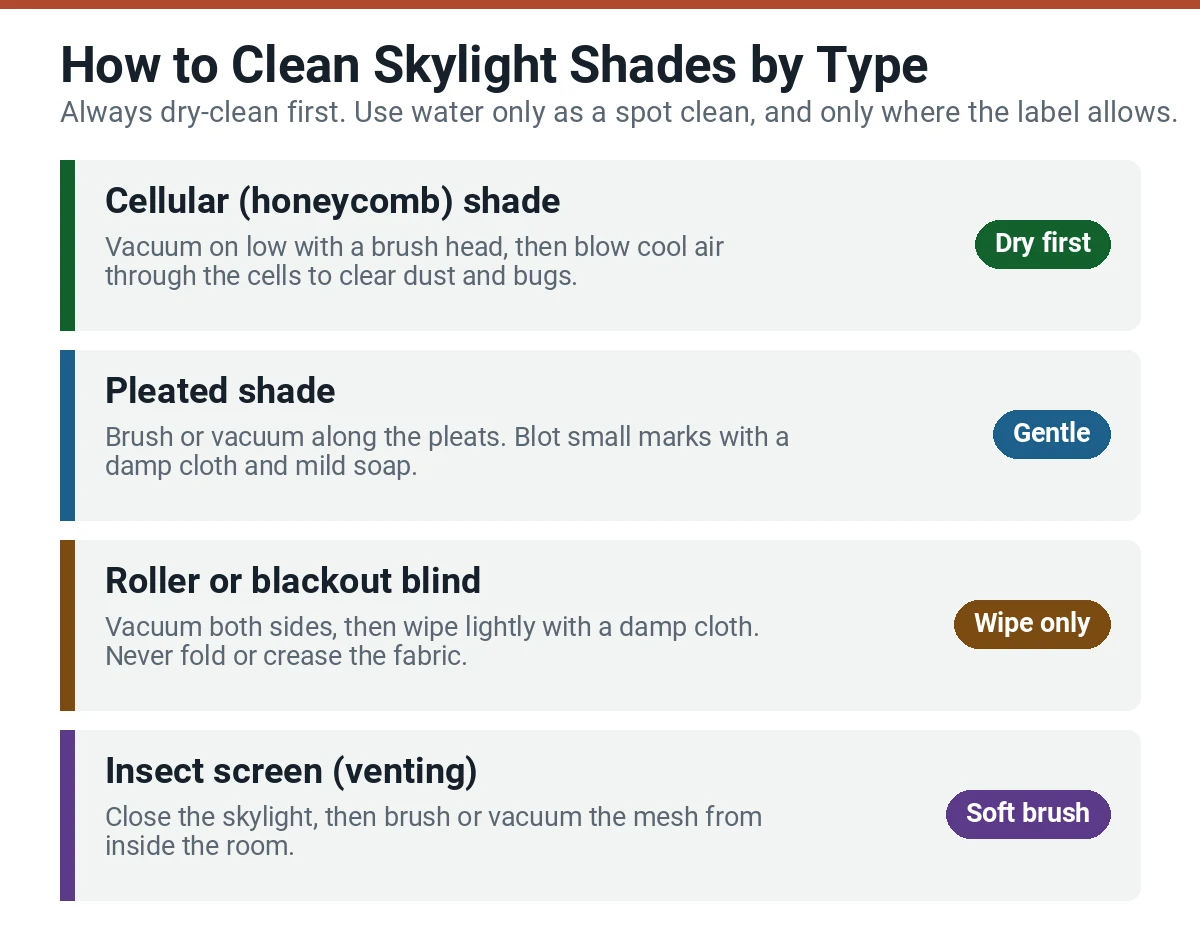
To clean skylight shades, dust them dry first with a vacuum on low and a soft brush head, then blow cool air through cellular shades to clear dust and bugs from the cells. Spot clean small marks with a barely damp cloth and mild soap, and blot instead of rubbing. Don’t soak the fabric unless its label says you can, and work from a steady ladder inside the room.
Skylight shades take more dust than the blinds on your regular windows. They face up, warm air carries dust to them, and they are hard to reach, so they often go years without a cleaning. In San Clemente, salty marine air and the dust that comes with Santa Ana winds can leave them looking gray faster. Here’s how to clean each type without damaging it.
Before You Start: Safety and Tools
Most skylights sit high above the floor, so the ladder matters more than the cleaning product. Use a stable step ladder on a flat floor, keep three points of contact, and don’t lean out to reach the far side. Move the ladder instead. If the skylight is too high for a ladder you are comfortable on, an extension pole with a soft duster can do most of the dry cleaning from the floor.
Check how the shade works before you touch it. Manual shades use a rod or a pull bar. Electric and solar shades run on a motor, so close or open them with the remote first and switch them off if you can. Never pull an electric shade by hand.
- A vacuum with a soft brush attachment and a low suction setting
- A clean, dry microfiber cloth and a second one for damp spot cleaning
- A hair dryer on the cool setting, or a can of air, for cellular shades
- Mild dish soap in a small bowl of lukewarm water
- A stable step ladder or an extension pole with a duster
Which Kind of Skylight Shade Do You Have?
The right method depends on the shade. Look at it from below with the shade closed.
| Type | How to spot it | Best cleaning method |
|---|---|---|
| Cellular (honeycomb) | Small tubes or cells you can see from the side | Vacuum on low, cool air through the cells, spot clean only |
| Pleated | Single layer of fabric folded like an accordion | Brush or vacuum along the folds, blot marks |
| Roller or blackout | Flat fabric that rolls up at one end | Vacuum, then a light damp wipe, no creasing |
| Insect screen | Fine mesh on a venting (opening) skylight | Soft brush or vacuum from inside, skylight closed |
How to Clean Cellular Skylight Shades
Cellular, or honeycomb, shades are the most common choice for skylights because the cells trap air and help with heat. Those same cells collect dust and the odd dead bug. This is the gentle way to clean a skylight cellular shade:
- Close the shade fully so the fabric is flat and tight.
- Vacuum it on low with the brush head, moving in the same direction as the cells. Don’t press hard or the cells can crush.
- Open the shade fully, then blow cool air through each cell from one end. A vacuum held at the other end catches what comes out.
- For a small mark, dip a cloth in mild soapy water, wring it until it is almost dry, and blot the spot. Don’t scrub.
- Leave the shade closed until any damp spot is fully dry, so it doesn’t dry with a crease.
Skip steam, strong cleaners and bleach. Heat can loosen the glue that holds the cells together, and strong cleaners can leave a pale patch that looks worse than the dust did.
Cleaning Pleated and Roller Skylight Blinds
Pleated skylight blinds are a single layer of folded fabric. Dust them with the brush head or a feather-light duster along the folds, then blot any marks the same way you would on a cellular shade.
Roller and blackout skylight blinds are flat, so they are the easiest to dust. Unroll the blind fully, vacuum both sides if you can reach, then wipe very lightly with a damp microfiber cloth. Let it dry fully before you roll it back up. Rolling a blind while it is still damp can trap moisture and leave marks, and folding the fabric can leave a crease you can’t remove.
Cleaning a Skylight Insect Screen
Venting skylights that open often have a fine insect screen on the inside. Close the skylight first so you aren’t pushing on the mesh with the sash open. Then run a soft brush or the vacuum brush head over the mesh to lift dust and cobwebs. If the screen is designed to come out, a gentle rinse and a full dry before you put it back works well. For more on mesh in general, see our guide to cleaning window screens.
What Not to Do
- Don’t soak, machine wash or steam a skylight shade unless the label allows it
- Don’t pull an electric or solar shade by hand
- Don’t force a blind out of its side channels
- Don’t spray glass cleaner up at the shade, it drips and spots the fabric
- Don’t climb onto the roof to reach a skylight from outside
Water Spots and Stains on the Fabric
Spots or tide-line rings on a shade usually mean water dripped onto it. On cool coastal mornings, the inside of skylight glass can fog up, and that moisture can drip onto the fabric below. A small leak around the skylight frame can leave the same kind of mark. A light ring may fade with careful blotting, but if new spots keep showing up when it hasn’t rained, have a roofer check the skylight and flashing before the fabric gets worse.
Clean the Glass While You Are Up There
A clean shade under dirty glass still makes the room look dim. Once the shade is done, open it fully and wipe the inside of the glass. Our step-by-step guide on how to clean skylights covers the inside, plastic domes and when the outside is safe to reach.
If the skylight is too high or the outside sits over a red tile roof, that’s where we come in. Our skylight and high window cleaning in San Clemente covers the glass inside and out, working carefully around shades, blinds and screens. For regular windows and their mesh, we also offer window screen and track cleaning.
Shade Cleaning FAQs
Want the skylight glass cleaned without climbing a ladder? Call Red Tile Window Co. at (949) 203-0880.