How to Clean Dog Nose Prints Off Windows (Pet-Safe)
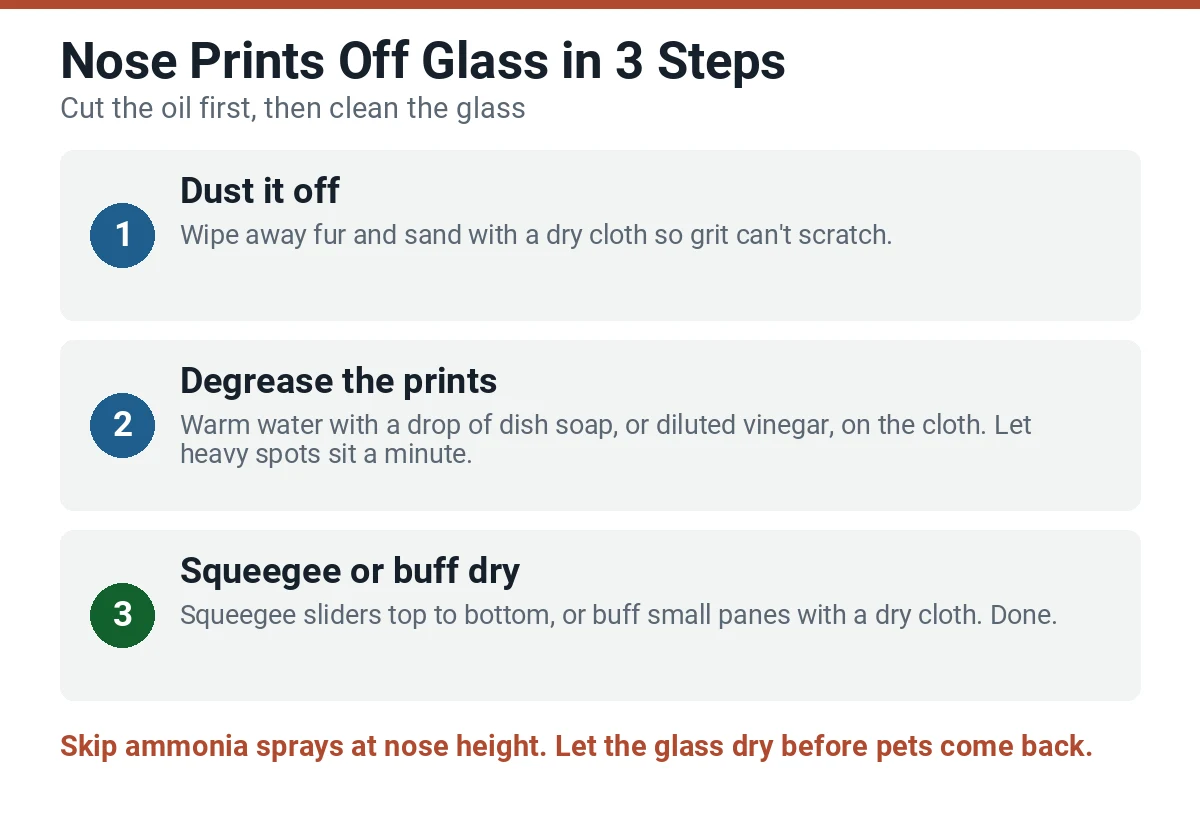
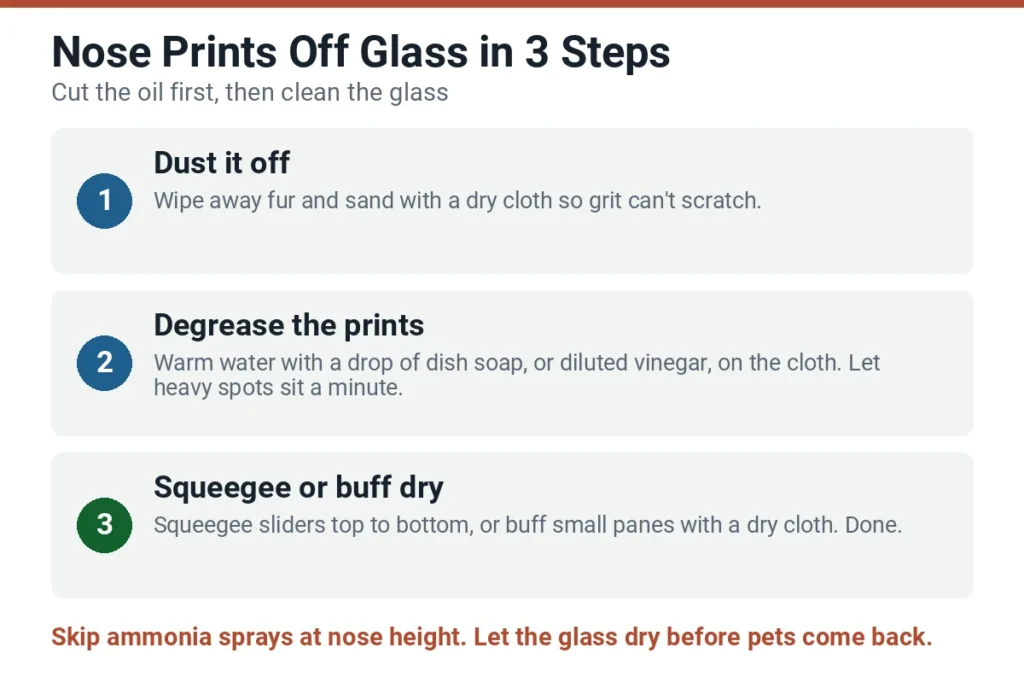
To clean dog nose prints off windows, wipe off loose fur and sand first, then wash the prints with warm water and a drop of dish soap, or diluted white vinegar, on a microfiber cloth. Let heavy spots sit for a minute, then squeegee or buff the glass dry. Plain glass spray tends to smear nose prints, because they’re made of oil.
Here’s why nose prints are so stubborn, which cleaners to keep away from pets, a quick routine for sliding doors, and how to cut down the mess in the first place.
Why Nose Prints Are So Stubborn
A dog’s nose works like a little ink pad. Every press on the glass leaves skin oil, saliva and mucus, and a tongue adds more. Glass cleaners are good at dust and water spots, but they don’t cut oil well, so they spread the film into a wider smear. That’s why so many owners say the window looks worse after they clean it.
The fix is to remove the oil first, then clean the glass.
Is Your Window Cleaner Safe Around Your Dog?
The glass your dog presses its nose against is the same glass you spray. Many common window cleaners contain ammonia, and veterinary clinics warn that ammonia can irritate a pet’s eyes, nose, mouth and lungs. On low windows and sliders, that’s right at nose height.
- Use warm soapy water or diluted white vinegar instead of ammonia sprays
- Spray the cloth, not the glass, so less mist hangs in the air
- Wipe the glass dry so nothing is left to lick
- Keep pets in another room until the glass and sills are dry, and open a window
- Skip scented and essential-oil cleaners, which can be harmful to pets, especially cats
- Store cleaners where pets can’t reach them
Vinegar is fine diluted and wiped dry. Pet poison experts warn that a pet drinking straight vinegar can get an upset stomach, so keep the bottle out of reach. If you think your pet has swallowed a cleaner, call your vet or the ASPCA Animal Poison Control Center.
The Degrease-First Method
- Dust it off. Wipe fur, sand and dirt off the glass with a dry microfiber cloth. Grit dragged across wet glass can scratch it.
- Mix your cleaner. Warm water and a drop of dish soap, or equal parts water and white vinegar.
- Degrease the prints. Dampen a microfiber cloth and wipe the smudged area. On heavy, dried prints, hold the damp cloth there for about a minute first.
- Clean the glass. Use a squeegee on sliders and big panes, top to bottom, wiping the blade between strokes. On small panes, buff with a dry microfiber cloth.
- Check it from an angle. Nose prints hide until the light hits them. Touch up any you missed.
Clean in the shade when you can, since sun dries the glass before you finish. If you keep getting streaks, see why windows streak after cleaning.
Sliding Doors: A 5-Minute Routine
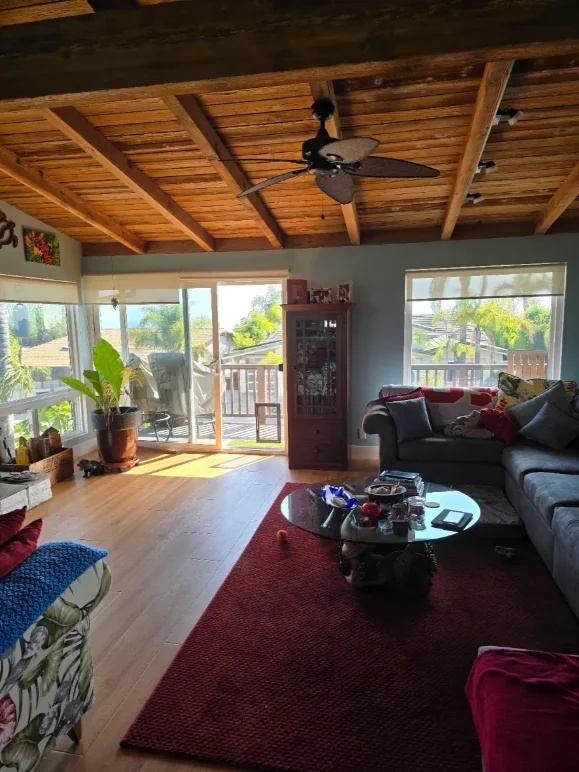
The slider is usually the worst spot, because that’s where dogs wait to go out. A short weekly routine keeps prints from building into a film:
- Wipe the lower half of the slider glass, both sides
- Wipe the handle and the frame edge where noses and paws land
- Vacuum the track to pull out fur and sand
- Wipe the sill and the glass on the dog door, if you have one
For tracks packed with sand and hair, see how to clean window tracks. After a walk on the beach trail, a quick paw wipe at the door saves the glass and the track. Near the coast, ocean-facing sliders also pick up salt film, which holds onto nose prints and dust.
Paw Scratches on Glass and Frames
Dogs that scratch to be let in can mark the glass and the lower frame over time. Light scuffs may clean up, but true scratches in glass are permanent, so prevention is the real answer:
- A clear, removable film across the bottom of the slider
- A clear panel attached with removable strips, which takes the scratching instead of the glass
- Training your dog to sit or ring a bell instead of scratching
- Keeping nails trimmed
Torn screens are a separate fix. See window screen repair, including tougher pet-resistant mesh.
Ways to cut down the mess
- Put a clear removable cling or film on the lower part of the glass you clean most
- Move a chair or plant so the favorite lookout spot is harder to reach
- Give your dog a bed or perch near the window
- Wipe paws after walks
- Keep a microfiber cloth and a small spray bottle of soapy water by the door
When to Get Help
If the prints have built up into a haze on big sliders or ocean-view glass, or the outside glass needs it too, see ocean-view window cleaning in San Clemente.
Pet Nose Prints FAQs
Sliders covered in nose art? Call (949) 203-0880. Tell us how many windows and sliding doors you have.