How to Clean Window Screens (and When to Repair Them Instead)
To clean window screens, take them out, brush or vacuum off the loose dirt, wash them gently with mild soapy water, rinse with a garden hose on a soft setting, and let them dry completely before you put them back. It takes a little patience, but no special tools.
Dirty screens make clean glass look dull, and the dirt in the mesh blows right back onto your windows. In San Clemente, salt, beach sand and wind-blown dust clog screens faster than in most places. Here’s how to clean them the right way, and how to tell when a screen needs fixing instead.
Why Your Screens Get So Dirty
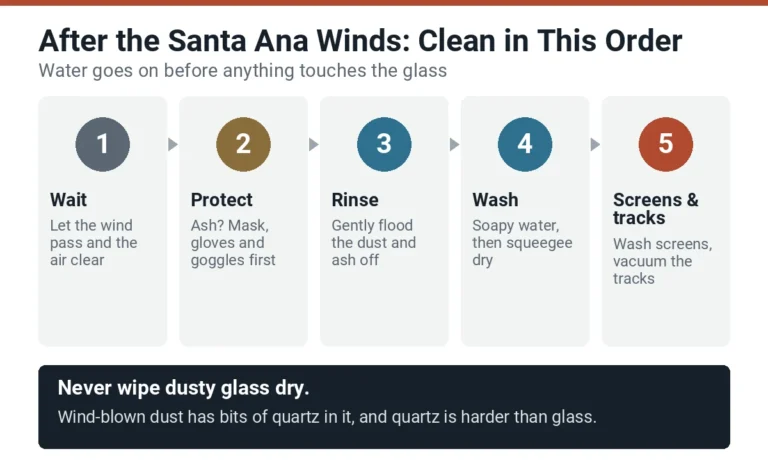
A window screen works like a filter. Every breeze pushes dust, pollen and grit through it, and a little of each gets stuck in the mesh. Near the coast, salt and fine sand add to it, and the damp morning air helps it stick. After a Santa Ana wind event, screens can turn gray overnight. See window cleaning after Santa Ana winds for that clean-up.
What You Need
- A vacuum with a soft brush attachment, or a soft brush
- A bucket of warm water with a few drops of mild dish soap
- A soft-bristle brush or sponge
- A garden hose with a gentle spray setting
- Old towels and a little painter’s tape for labels
Taking Screens Out Without Breaking Them
Most screens are held in by pull tabs, spring clips or small latches. Sliding screens often lift up into the top track and then swing out at the bottom. Find how yours are held in before you pull, and never force a stuck screen. That’s how frames bend and mesh tears.
Put a small piece of tape on each screen with the room and window written on it. Screens that look the same are often slightly different sizes, and putting them back is much easier when you know which goes where.
How to Wash Window Screens, Step by Step
- Lay them flat on a clean driveway, patio or old towel.
- Remove loose dirt first with a vacuum brush or soft brush, on both sides.
- Wash gently with soapy water and a soft brush or sponge. Support the mesh from behind and don’t press hard.
- Rinse well with the hose on its softest setting, top to bottom, before the soap dries. Leftover soap attracts more dust.
- Dry completely. Shake off the water, lean the screens upright and let them air-dry, flipping them once. The mesh holds water longer than it looks.
- Put them back with all four sides seated, so there are no gaps for insects.
How to Clean Screens Without Removing Them
For light dust, or screens that are hard to remove, you can clean them in place:
- Vacuum both sides with a soft brush attachment
- Wipe with a microfiber cloth dampened in soapy water
- Wipe again with a cloth dampened in clean water
- Finish with a dry cloth, or let them air-dry
A lint roller works well for a quick touch-up between washes. For upstairs screens, work from inside the room. Carrying screens up and down a ladder is a good way to get hurt.
What Your Screens Are Made Of
| Mesh | Good to know | Cleaning |
|---|---|---|
| Fiberglass | The most common. Won’t rust, but tears more easily and can sag with age | Gentle brushing only. Don’t stretch it |
| Aluminum | Stronger, but dents stay. Salt air can corrode it over the years | Soft brush and soapy water. Rinse salt off regularly |
| Pet screen | Thick, coated mesh made to resist claws | Brush or vacuum pet hair often, then wash and rinse |
Near the ocean, fiberglass is often the better long-term choice, because salt air slowly corrodes metal mesh. See window screen repair for mesh options.
Mistakes that ruin screens
- Pressure washing, which tears the mesh and bends the frame
- Scrubbing hard enough to stretch fiberglass mesh
- Putting screens back wet, which traps moisture and invites mildew
- Leaving soap in the mesh
- Bleach, ammonia or harsh cleaners that damage the mesh coating
- Losing track of which screen goes where
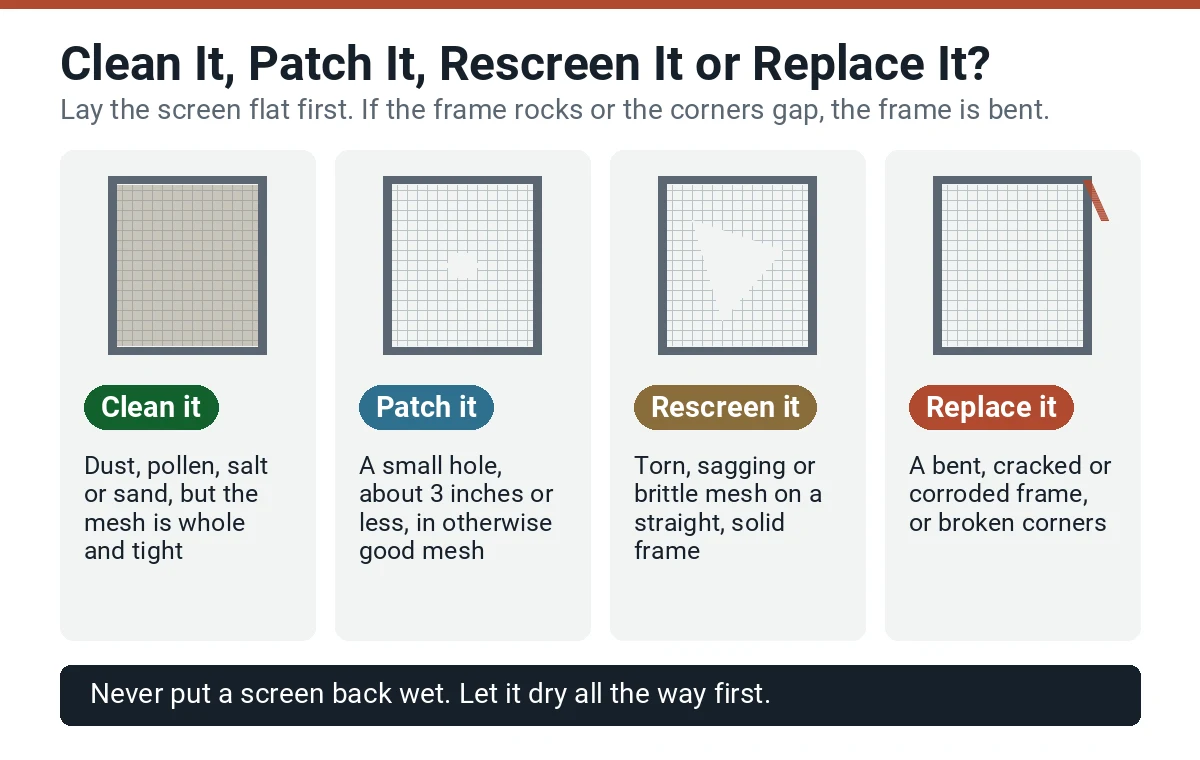
Clean It, Patch It, Rescreen It or Replace It?
- Clean it when the mesh is whole and tight, just dirty.
- Patch it when there’s a small hole, about 3 inches or less. A self-adhesive patch works, but it won’t look new.
- Rescreen it when the mesh is torn, brittle or sagging but the frame is straight and solid. New mesh goes into the old frame.
- Replace it when the frame is bent, cracked or corroded, or the corners have come apart.
The flat test
Lay the screen on a flat floor. If it sits flat and square, the frame is fine and new mesh will do. If it rocks, twists or the corners gap, the frame is bent and usually needs replacing.
Don’t Forget the Tracks
While the screens are out, it’s the best time to clean the window and sliding door tracks underneath. See how to clean window tracks.
When to Call for Help
If you have a lot of screens, second-story screens that are hard to get out, or screens that are torn or bent, it can be worth having them done with the rest of your windows. See screen and track cleaning and window screen repair, or call (949) 203-0880 for a free quote.
Window Screen FAQs
Rather not wrestle the screens out? Call (949) 203-0880. Tell us how many screens you have and whether any are torn.