
How to Remove Hard Water Stains From Shower Glass
To remove hard water stains from shower glass, spray it with a 1:1 mix of white vinegar and water, keep it wet for 15 to 30 minutes, scrub gently with a soft sponge, then rinse and dry. That dissolves most fresh mineral spots. If the glass is still cloudy after a proper soak, it may be etched, and no cleaner will wash that off.
Here’s how to tell which one you have, how to clean it without scratching the glass, and how to keep it clear in a San Clemente bathroom.
Why Shower Glass Gets Cloudy
Tap water carries dissolved calcium and magnesium. Every time shower water dries on the glass, it leaves a thin layer of those minerals behind. Soap and body oils stick to that layer, and the two build up together into the white haze you see.
Left long enough, the minerals can do more than sit there. Over months and years they can attack the surface of the glass itself. That’s called etching, and it’s permanent.
San Clemente’s Hard Water, in Numbers
San Clemente’s latest water quality report, covering 2025, puts its imported water at about 14 grains of hardness per gallon on average, and water from the Baker treatment plant at about 17. Anything over about 7 grains per gallon counts as hard water. That’s why shower doors here can cloud up within weeks if nobody dries them.
Is It Buildup or Etching? How to Tell
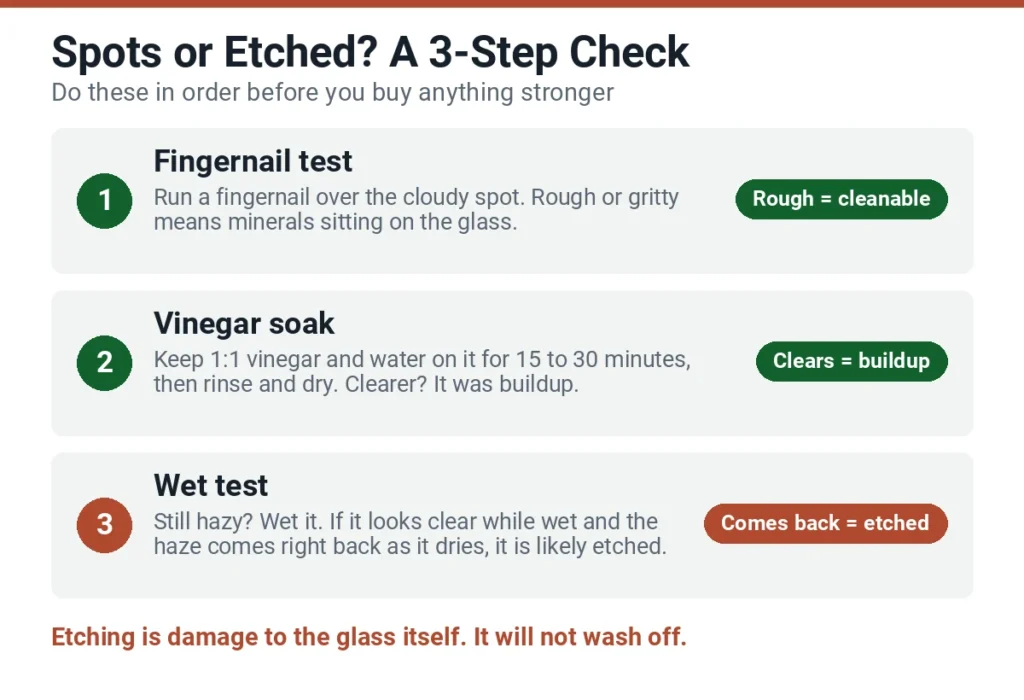
Check before you reach for anything stronger. You’ll save yourself from scrubbing glass that can’t get any clearer.
- Fingernail test. Run a fingernail over the cloudy area. Rough or gritty means minerals are sitting on the surface, and they can come off.
- Vinegar test. Do a proper soak, as shown below. If the glass gets clearer, it was buildup.
- Wet test. If it’s still hazy, wet the glass. If it looks clear while wet and the haze comes right back as it dries, the glass is most likely etched.
Most older shower doors have some of both: buildup you can remove, sitting on top of light etching you can’t. Textured or frosted door? See how to clean textured glass.
The Safe Way to Remove Hard Water Stains
- Mix it. Fill a spray bottle with equal parts white vinegar and water. A few drops of dish soap helps it cling to vertical glass.
- Soak it. Spray the glass until it’s fully wet. For heavy spots, press vinegar-soaked paper towels onto the glass or cover them with plastic wrap so the vinegar doesn’t run off.
- Wait. Leave it 15 to 30 minutes, and spray again if it starts to dry.
- Scrub gently. Use a non-scratch sponge or microfiber cloth, working top to bottom.
- Rinse well. Rinse the glass, the frame and the track with plain water so no vinegar sits on metal or stone.
- Dry it. Squeegee, then buff with a dry microfiber cloth.
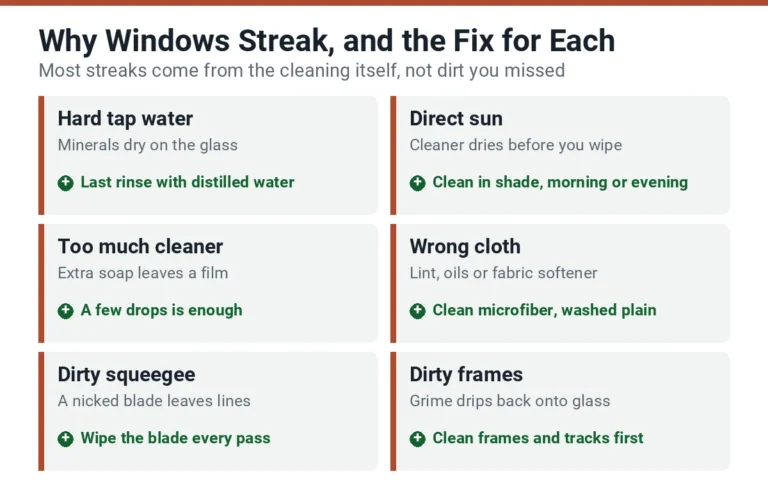
Open a window or run the fan while you work. If you’re getting streaks on the glass, see why glass streaks after cleaning.
When Vinegar Isn’t Enough
For older, thicker buildup, step up slowly:
- Repeat the soak. Two or three rounds often do more than one long scrub.
- Baking soda paste. Rub a paste of baking soda and water over the loosened spots with a soft cloth. It works as a gentle scrub. Mixing it with vinegar mostly cancels both out, so use them one after the other.
- A melamine sponge. Damp, with light pressure, after testing a low corner. It works like very fine sandpaper.
- A store-bought descaler. Follow the label’s contact time exactly, wear gloves, ventilate, and rinse twice.
Never do this
- Mix vinegar, or any acid, with bleach. Health officials warn it makes chlorine gas that can burn the eyes and lungs.
- Use abrasive powders, scouring pads or steel wool. They leave scratches that collect minerals faster.
- Scrape with a razor blade, unless your door’s maker says it’s okay
- Let acid sit on marble, travertine or metal fixtures
- Use bleach for mineral spots. It doesn’t dissolve them
If Your Shower Door Has a Factory Coating
Many newer shower doors come with a protective coating that helps water sheet off. Coatings have their own rules, and some common tricks can wear them away. Check the paperwork from your installer or the door maker’s care sheet before using vinegar, melamine sponges, descalers or polishes. Their instructions come first.
How to Keep Shower Glass Clear
- Squeegee after every shower. It takes about 30 seconds and stops most buildup before it starts.
- Wipe weekly with diluted vinegar and a microfiber cloth.
- Let it dry. Leave the door open or run the fan after showering.
- Consider soft water. A softener reduces the minerals that cause spots, though soap film still needs wiping.
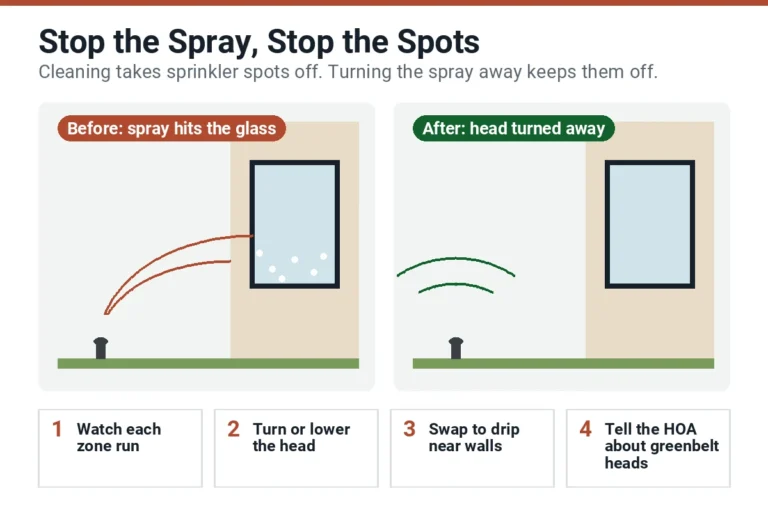
The same hard water spots your outside windows too. See sprinkler spots on windows and hard water stain removal for glass outside the house.
When to Get Help
If the glass is coated, the buildup has been there for years, or you’re not sure whether it’s etched, it’s worth having someone look. See shower glass and interior glass cleaning. Etched glass may improve, but it may not fully clear.
Shower Glass Hard Water FAQs
Shower doors and windows both spotted? Call (949) 203-0880. Tell us how many shower doors and windows you have.