
Solar Panel Cleaning San Clemente: When It Helps and How It’s Done Safely
Dirty solar panels make less power, but not every panel needs a wash. Light dust usually rinses off in the next good rain. Bird droppings, salt film and heavy dust don’t. Solar panel cleaning in San Clemente is worth it when your panels have the kind of dirt rain can’t move, and it has to be done gently.
No-obligation quote · San Clemente and Dana Point
Good For
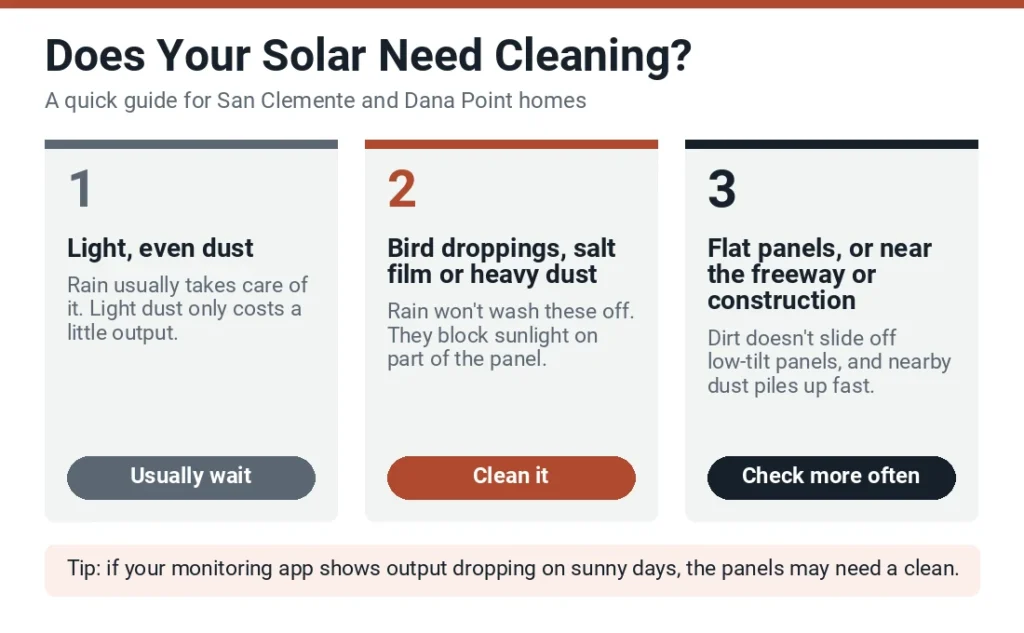
Not sure which group your panels fall into? Look at them from the street or a window on a sunny morning. Spots and patches mean they need a clean. A light, even film usually doesn’t.
How often should solar panels be cleaned in San Clemente? Many homes do well with a clean once or twice a year. Panels with bird droppings, homes near the coast, and homes close to the freeway or construction may need it more often. Light dust usually comes off in the next good rain.
When Cleaning Helps, and When It Doesn’t
Here’s the honest version of solar panel cleaning in San Clemente. Studies of California solar systems have found that light dust only costs a small amount of output, and many panel makers say rain is usually enough. Some dirt is a different story.
Light, Even Dust
A thin layer of dust lowers output a little, and the next rain usually washes most of it away. For many homes, a wash isn’t urgent.
Bird Droppings
Droppings bake onto the glass, block sunlight on part of the panel and don’t rinse off in the rain. Left for months, they can also mark the glass. This is the most common reason panels need a clean. Droppings on your windows come off the same careful way; see how to clean bird poop off windows.
Salt Film, Marine Layer and Ash
Near the coast, salt film builds up on panels the same way it does on windows. Weeks of gray spring mornings leave a film that rain doesn’t rinse away, and fire season can add a layer of fine ash.
Santa Ana Dust and Flat Panels
A dry Santa Ana wind can leave a heavy coat of dust in one night. Dirt doesn’t slide off flat or low-tilt panels, and homes near the I-5 or construction collect more of it.
How We Clean Solar Panels
Careful on Red Tile Roofs
Clay tile cracks when it’s stepped on the wrong way. When panels can be reached from the ground, nobody walks on your roof. When they can’t, the crew steps carefully and stays off tiles that could break. Check your panel maker’s care instructions too, since some brands have their own cleaning rules.
This is cleaning only. Panel repairs and new installs are a job for your solar installer.

Panels Looking Dirty?
Tell us how many panels you have, one story or two, and what’s on them. You’ll get a free quote.
Pigeons Nesting Under Your Panels?
Pigeons love the shaded gap under rooftop panels. Once they move in, you get nests, droppings on the panels and the roof, leaves and debris piling up underneath, and noise in the morning. Cleaning takes care of the mess, but it comes back if the birds stay.
Bird netting, sometimes called a critter guard, closes the gap around the edges of the panels so birds can’t get under them. It can be added when your panels are cleaned. Ask about it when you call for solar panel cleaning in San Clemente or Dana Point. See also bird nests and droppings around the house.
Coastal and Inland Panels Get Dirty Differently
Solar panels in San Clemente get dirty in two different ways, depending on how close you live to the water.
Coastal Homes
Close to the water, salt film and bird droppings are the main problem. The same salt that hazes your windows settles on your panels, and rinsing it off keeps it from sitting on the frames and hardware.
Inland Homes
In Talega, Forster Ranch and Rancho San Clemente, dust from Santa Ana winds, canyons and construction is the bigger issue. Big tile roofs there are often best cleaned from the ground.
Newer Homes
California has required solar on most new single-family homes since 2020, so a lot of newer homes have panels that have never been cleaned.
Check Your Solar App First
Most solar panels in San Clemente come with an app that shows how much power they make. If output drops on clear, sunny days and nothing else has changed, dirty panels are a likely cause. Compare a sunny day now with a sunny day a few months ago.
How much output changes after a clean varies a lot from home to home, so you won’t hear a promised number from us. You’ll get an honest look at what’s on your panels.
How Often Should Solar Panels Be Cleaned?
These are typical starting points, not rules.
| Home | Typical schedule | Why |
|---|---|---|
| Most homes | Once or twice a year | Rain handles light dust in between |
| Panels with bird droppings | As soon as you notice them | Droppings don’t rinse off in the rain |
| Homes near the coast | Two to three times a year | Salt and marine-layer film build up on the glass |
| After a Santa Ana wind, ash or nearby construction | Soon after the event | Heavy dust settles all at once |
Best Times of Year
Rather not keep track? Panels can go on the same recurring schedule as your windows.
Windows and Solar in One Visit
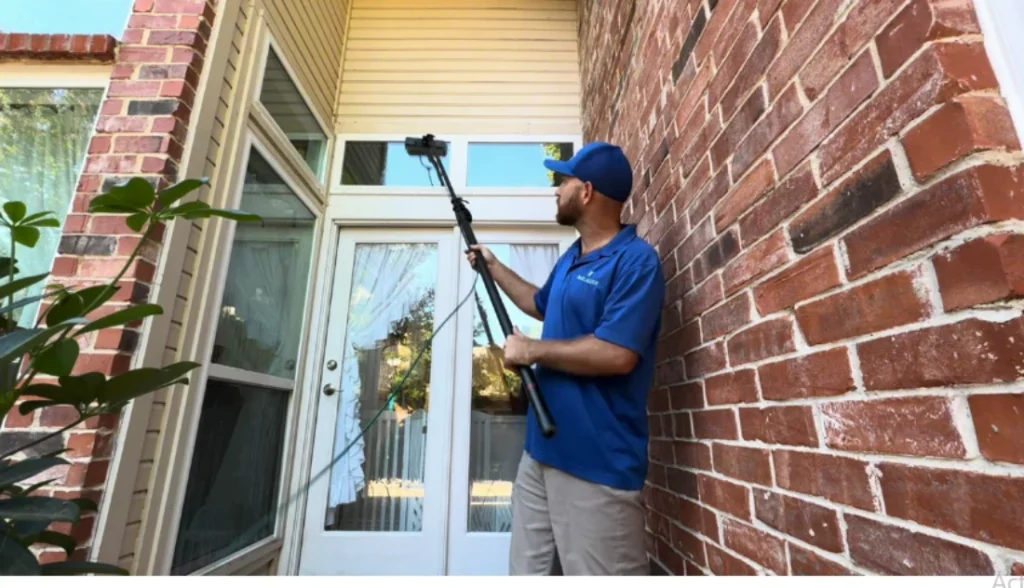
Solar panels and windows are both glass, and they’re cleaned with the same purified water and soft brushes. Booking window and solar panel cleaning in San Clemente together saves you a second appointment.
Want Both Done?
Tell us your window count and how many panels you have. You’ll get one free quote for both.
Can You Clean Solar Panels Yourself?
Panels you can reach safely from the ground can be rinsed with a hose and a soft brush, as long as your panel maker allows it. Do it early or late in the day, skip harsh soap and scrubbers, and never use a pressure washer or scrape droppings off.
Don’t climb onto the roof to do it. Tap water can also leave spots as it dries, the same way it does on windows. See hard water stain removal.
Related Pages
What Does Solar Panel Cleaning Cost in San Clemente?
It depends on how many panels you have, one story or two, how easy they are to reach, and how dirty they are. Bird netting is priced on its own.
Most jobs fall into one of two groups: a routine rinse for panels with light dust or salt film, or a heavier clean for panels with baked-on droppings or months of buildup. You’ll know which one yours needs before you book.
Call (949) 203-0880 with your panel count for a free quote. Adding solar to a window cleaning visit is usually simpler than booking it on its own.
Why San Clemente Homeowners Call Us
Solar Panel Cleaning FAQs
More answers: see our full list of window cleaning FAQs.
Get Your Solar Panels Clean
Tell us how many panels you have, one story or two, and what’s on them. You’ll get a free quote and an honest answer about whether they need it.
