
Condensation Between Window Panes: Can It Be Cleaned?
A foggy, milky haze trapped inside a double-pane window is one of the most common window questions, and one of the most misunderstood. No amount of cleaning reaches it. Here’s why it happens, how to tell where the fog really is, and what actually fixes it.
Questions? Call for a straight answer
Quick Facts
Can condensation between window panes be cleaned? No. Fog or moisture between the two panes of a double-pane window means the seal around the glass unit has failed and moist air got inside. Cleaning can’t reach it. The usual fix is replacing the insulated glass unit, often without replacing the whole window.
Where Is the Moisture? How to Tell
| Where it is | What it means | What to do |
|---|---|---|
| On the room side of the glass | Indoor humidity condensing on cool glass | Wipe it, run fans, and air out the room |
| On the outside surface | Morning dew or marine layer moisture | Normal. It dries on its own |
| Between the two panes | The seal has failed and moisture got inside | Replace the glass unit or the window |
| A white haze that won’t wipe off either side | Deposits inside the unit, or etching on the outside | Clean both sides first. If it’s still there, it’s inside |
Easy test: clean the inside surface, then the outside. If the fog is still there, it’s between the panes.
Why Window Seals Fail
Sun and heat. Glass expands in the sun and contracts at night. Over years, that daily movement cracks the seal, which is why sun-facing windows often fail first, like the west-facing ocean-view glass on many San Clemente homes.
Age. Double-pane windows commonly last somewhere around 10 to 20 years before seals start to go.
Water sitting in the frame. Poor drainage around the glass weakens the seal. Clogged weep holes in the track are one common cause. See how to clean window tracks.
The drying beads give out. A strip inside the unit holds moisture-absorbing beads. Once the seal leaks, they fill up and can’t keep the space dry.
Your Options
| Option | When it fits | Good to know |
|---|---|---|
| Replace the glass unit | The frame is still in good shape | The most common fix. In most cases the glass can be replaced |
| Replace the whole window | The frame is damaged, old or leaking | Costs more, but fixes everything at once |
| Defogging | You only care about the look | Holes are drilled to dry the space. Critics say it clears the fog but doesn’t restore the seal or insulation |
| Leave it | Budget or timing | The fog can leave permanent streaks and haze inside the glass over time |
Check the window’s warranty first. Many manufacturers cover seal failure for a set number of years.
What Window Cleaning Can Fix
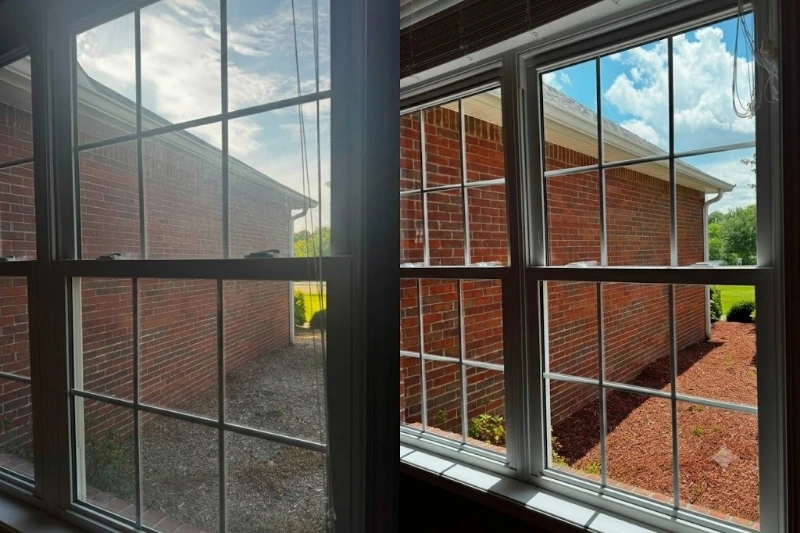
Not sure which you have? In San Clemente and nearby, a window cleaner can clean both sides and tell you honestly if the fog is inside the glass. See hard water and salt removal.
Not Sure What’s Fog and What’s Dirt?
Call and describe what you’re seeing. If it’s a cleaning job, you’ll get a free quote.
Why It Shows Up in the Afternoon
Moisture between panes often only shows when the sun warms the glass, so a failed window can look fine in the morning and cloudy by afternoon. Shaded windows can hide a failed seal for a long time.
Don’t Drill It Yourself
Drilling into a sealed glass unit can crack it and may void what’s left of the window’s warranty. If the fog bothers you, get a glass shop to look at the unit.
Condensation Between Panes FAQs
Clear the Glass You Can Clean
If your haze turns out to be salt, sprinkler spots or dirt, it comes off. Call for a free quote and a straight answer.
