
Window Cleaning Process in San Clemente: What to Expect
Hiring a window cleaner is easier when you know what the visit looks like. Here’s how the window cleaning process in San Clemente usually goes, from the first call to the last look at the glass, and the few things you can do ahead of time to make the day go smoothly.
A quote by phone usually takes a few minutes
At a Glance
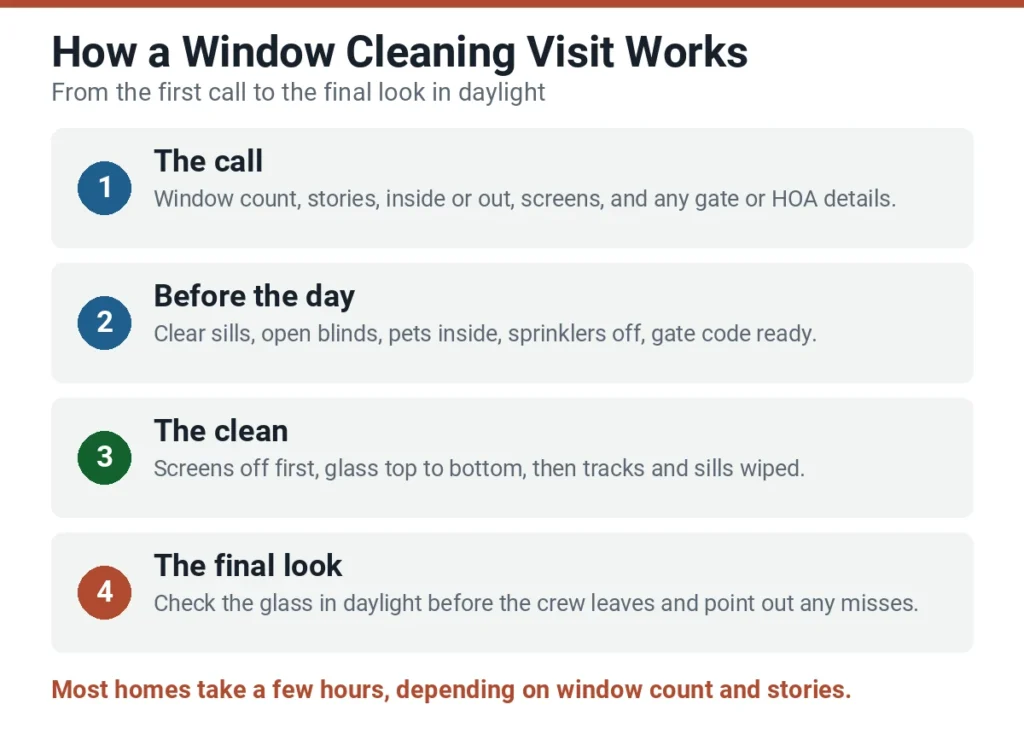
What to expect from a window cleaning service: the visit usually goes in four steps. A short call to count your windows and sort out access, a little prep on your side, the clean itself with screens first, glass top to bottom and then tracks and sills, and a final look at the glass in daylight. Most homes take a few hours, depending on how many windows there are, how many stories, and how much buildup is on the glass.
Step 1: The Call
Most of the planning happens in a few minutes on the phone. Expect to be asked about:
- About how many windows and sliding doors you have
- One story or two, and any skylights or high glass
- Inside and out, or outside only
- Whether you want screens and tracks done
- Anything stubborn: salt haze, white spots, paint or stickers
- Your neighborhood, plus any gate code, guard desk or HOA rules
Counting matters more than people think. A double-hung window has two panes, and inside and out doubles that again, so having a rough count ready keeps the quote accurate. For how pricing works, see window cleaning cost in San Clemente.
Step 2: How to Prepare for Window Cleaners
None of this is required, but each item saves time on the day and protects your things.
Inside the house
Raise blinds and tie back curtains. Move plants, photos and small items off the sills, and slide furniture a couple of feet away from the glass where you can.
Outside the house
Move patio furniture, grills and planters away from windows. Make sure side gates open and paths to the windows are clear.
Pets and people
Keep pets in a room away from the work, and let the crew know about any dogs in the yard so gates are handled carefully.
Sprinklers
Turn off sprinklers near the windows for the day. Fresh spray on clean glass leaves new white spots as it dries.
Gates and access
Have your gate code or guard instructions ready if you live in a gated community, and mention any HOA work-hour rules.
Problem windows
Point out windows that stick, leak, have cracks, fogged panes or heavy spots, so nobody is surprised later.
Step 3: What Happens on the Day
- A quick look first. The crew confirms which windows are included and notes anything already damaged, like scratches or fogged panes.
- Screens come off. They’re cleaned separately and set aside so they don’t drip on finished glass.
- Outside glass, top to bottom. Working downward keeps drips off windows that are already done. On ocean-facing homes, salty glass is wet down before any tool touches it, since dry salt can scratch.
- Inside glass. Done with a damp, controlled method so sills and floors don’t get soaked.
- Tracks, sills and frames. Sand, dust and dead bugs are cleared where they’re part of the job.
- Screens go back on the right windows.
Upper-story glass is often reached from the ground with a water-fed pole, which keeps ladders off clay tile roofs and patio covers.
What’s Usually Included, and What’s Often Extra
Scope varies from one company to the next, so it’s worth asking exactly what your quote covers.
| Usually part of a full clean | Often priced or booked separately |
|---|---|
| Outside glass | Hard water spot removal |
| Inside glass, if booked | Paint, stucco or sticker removal |
| Screens taken off and wiped | Deep screen washing or rescreening |
| Sills and frames wiped | Heavily packed tracks |
| Sliding door glass | Skylights and very high glass |
For the extras, see hard water stain removal, screen and track cleaning and skylight and high window cleaning.
San Clemente Homes Add a Few Wrinkles
Ocean-facing glass
Salt film builds up fast near the beach and looks like haze in the sun. It needs a careful wet clean, not a quick wipe. See ocean-view window cleaning.
Clay tile roofs
Tile cracks underfoot, so upper glass above tile is best reached from the ground. Ask how roof access is handled before the day.
Gated communities
Many neighborhoods here have guard gates or HOA rules. Sorting out access ahead of time keeps the visit on schedule. See HOA window cleaning.
Step 4: The Final Look
The last step of the window cleaning process is yours. Before the crew leaves, take a few minutes to look over the windows yourself. It’s much easier to sort out a missed spot while everyone is still there.
- Look at the glass in daylight, from a few angles, inside and out
- Check that each screen is back on the right window and seated properly
- Look at tracks and sills for leftover grit or water
- Open and close a few sliders to make sure they glide
- Point out anything you see right away
Some marks aren’t dirt. Etched spots, scratches and fog between panes stay after any clean. See condensation between window panes if you see haze inside the glass.
Good Questions to Ask When You Book
Every company handles these a little differently. Asking up front means no surprises on the day.
- What exactly is included in the quote?
- Are screens, tracks and sills part of it?
- How is upper glass reached, and is anyone going on the roof?
- What happens if it rains on the day, or right after?
- Do I need to be home, and for which part?
- What paperwork does my HOA or landlord need?
For choosing between companies, see how to choose a window cleaning company.
Window Cleaning Visit FAQs
Ready to Get Your Windows Done?
Tell us roughly how many windows you have, one story or two, and your neighborhood. A quote over the phone takes just a few minutes.
